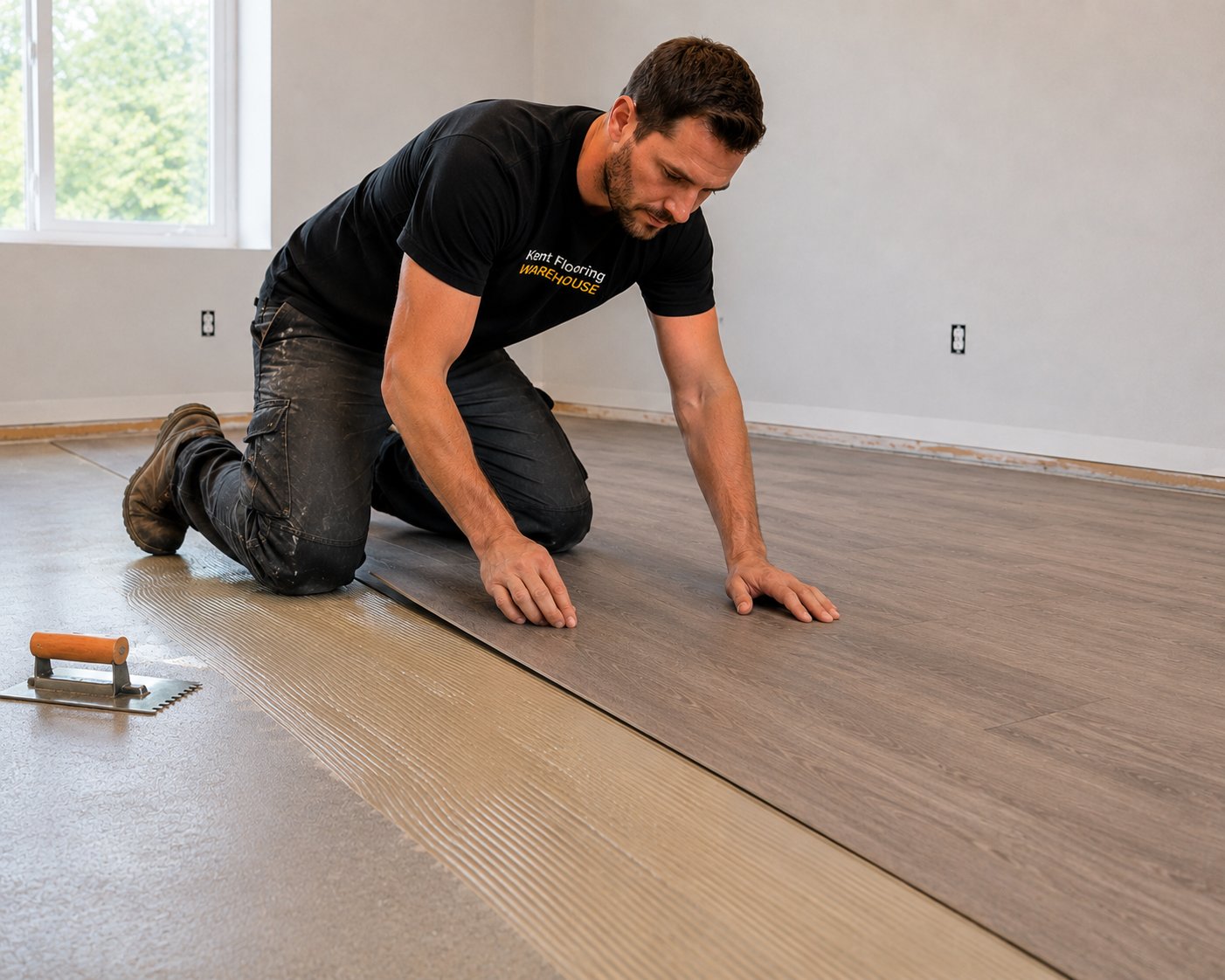
Damp-proof Membrane completed in the ME10 district (wide shot)

Subfloor preparation · Sittingbourne, ME10

Dealing with a Damp Subfloor — Sittingbourne

Surface DPM epoxy coatings explained for Sittingbourne homes and commercial units where a concrete or screed floor tests damp before flooring.

  • Free survey and measure
  • Fitted by our own team
  • Preparation priced in writing
  • Sittingbourne and ME10 covered
Subfloor preparation page — Explains when a surface damp-proof membrane is needed on a floor in Sittingbourne and how it is applied over concrete or screed.

Concrete floors, especially in newer builds or after water ingress, can hold moisture for a long time as they cure or dry out. Fitting flooring straight onto a damp base risks adhesive failure, mould, and floorcoverings lifting or discolouring, so a DPM is the standard fix where drying out naturally is not practical.

Bay-fronted terraces near Bapchild often have a step or dip where a hearth used to sit, and that recess needs building up evenly before any new floor goes near it.

What each visit involves

  1. Step 1

    Cure

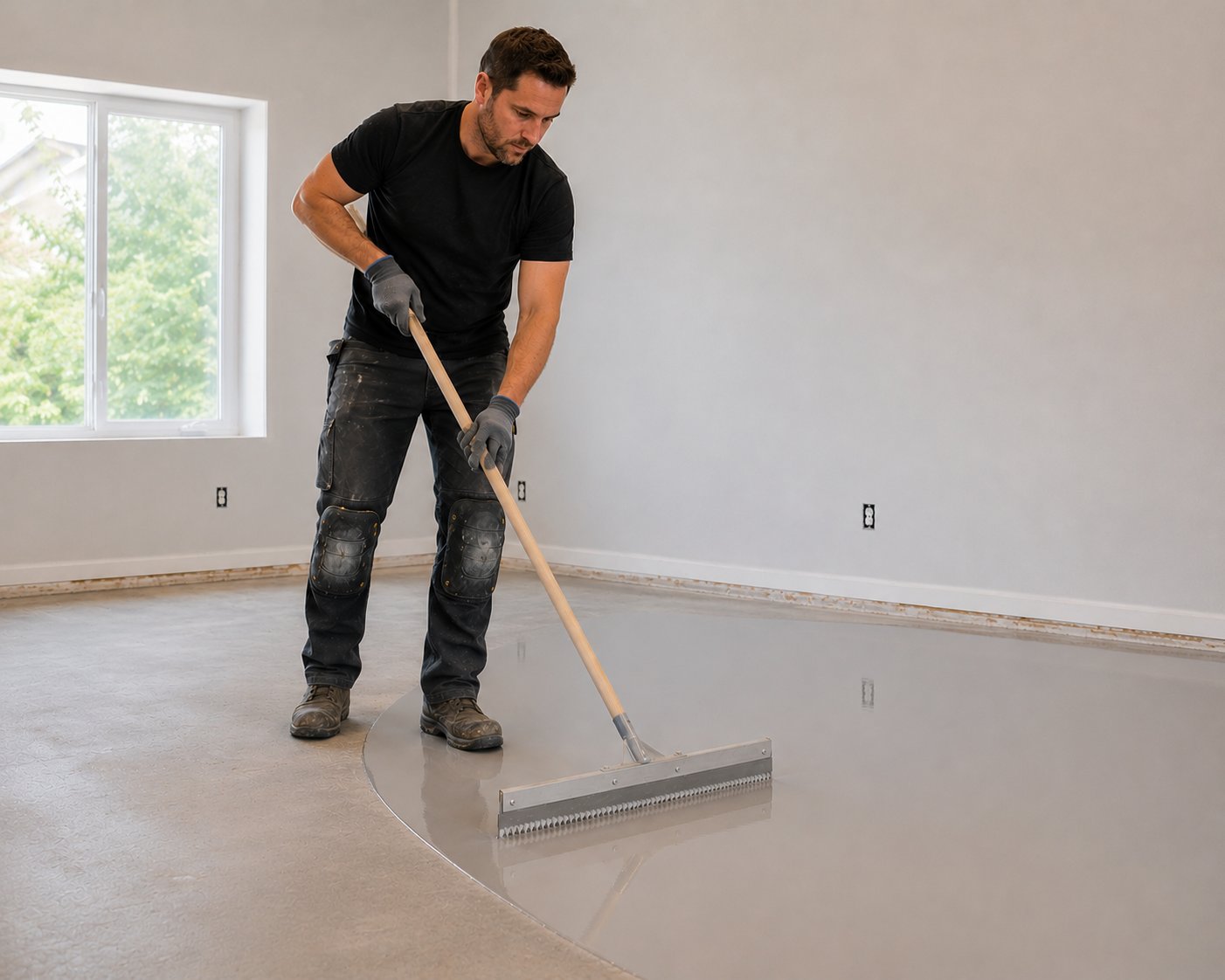
    Allow the epoxy to cure fully before any further layers are applied.

  2. Step 2

    Level and fit

    Apply latex if needed, then fit the chosen floorcovering once the surface is ready.

  3. Step 3

    Assess the source

    Establish whether high readings come from natural drying, a leak, or a failed damp-proof course before treating.

Suitable floorcoverings over a DPM

Once a DPM is fully cured and, where needed, latex-screeded over the top, most floorcoverings can be fitted as normal, including LVT, vinyl and carpet on a suitable underlay. Timber and laminate floors may need extra consideration given their greater sensitivity to residual moisture, so the manufacturer's specific requirements are checked before fitting proceeds.

New-build slabs and drying-out timescales

A freshly poured concrete slab in a {town} new build can take many months to reach a safe moisture level naturally, with drying speed depending on slab thickness, ambient temperature and site ventilation. Developers under pressure to complete often prefer a DPM to natural drying, since it removes the wait without compromising the finished floor if applied correctly.

  • Thicker slabs and ground-bearing floors dry more slowly than suspended concrete decks
  • Heating a property too early can trap moisture near the surface rather than releasing it
  • A DPM lets fit-out schedules proceed independently of the slab's natural drying curve

Checks that avoid later problems

  • Allow the epoxy DPM to cure fully before latex or flooring is applied
  • Check the flooring manufacturer's maximum moisture threshold for your chosen product
  • Ask whether one or two coats of DPM are needed for the reading recorded in Sittingbourne
Material sample laid out before damp-proof membrane work near Bapchild (seam close-up)

Routes, roads and areas covered

Areas

  • Murston
  • Kemsley
  • Milton Regis
  • Iwade
  • Bapchild

Getting to you

  • M2 Junction 5
  • A2
  • A249

Postcode district ME10, Swale Borough Council.

Retail and industrial areas

  • Eurolink Industrial Estate
  • Kent Science Park
  • Sittingbourne Retail Park

What lies under Sittingbourne floors

Flats converted from larger houses around Bapchild sometimes sit on a floor structure never designed for that use, so we check joist spacing before recommending an overlay.

Deliveries routed past the Bapchild let us bring extra compound if a job in Sittingbourne turns out worse than the initial inspection suggested.

What a DPM does and does not fix

  • It blocks moisture vapour from reaching the new floorcovering and adhesive
  • It does not stop a leak, so any active water source must be fixed separately
  • It does not lower the moisture content of the slab itself, only protects the flooring above it
  • It is not intended to be a long-term substitute for correcting a failed structural damp-proof course

A short visual tour

Material sample laid out before damp-proof membrane work near Bapchild (seam close-up)
Old covering lifted and cleared on a Sittingbourne job (pre-fit checks)
Finished damp-proof membrane near Bapchild, Sittingbourne (ready to use)

Images show our own flooring work across Kent. Photographs are illustrative of the type of work described, not of a specific customer address.

Standards we hold on damp-proof membrane

  • Free survey and measure with no obligation to order.
  • Samples brought to you so the choice is made in the room itself.
  • Fitted by our own team — we do not subcontract the installation.
  • Subfloor preparation written into the quote rather than added later.
  • Supplied direct from our own warehouse stock.
The warehouse

Unit 9, Matilda Close, Gillingham Business Park, Gillingham

We reach Sittingbourne via the A249, and cover the wider ME10 district as part of our normal round.

damp-proof membrane questions we get asked in Sittingbourne

Is a new concrete slab automatically too damp for flooring?

Not automatically, but new slabs often need longer to dry naturally or a DPM to allow flooring to be fitted sooner without waiting out the full drying period.

Does moisture testing cost extra?

Where our survey identifies a risk of elevated moisture, testing and any resulting damp-proofing work is included in the quote for your job.

What is the difference between a surface damp meter and a hygrometer test?

A surface damp meter gives a quick, indicative reading of the top of the slab, while a hygrometer test is sealed to the floor over a conditioning period and measures relative humidity within the slab itself, which is the recognised approach for deciding whether a DPM is needed.

Can a DPM be applied over an old bitumen membrane?

Sometimes, but the existing membrane's condition and compatibility with the new epoxy system need checking first. Where compatibility is uncertain, further preparation or removal may be recommended instead.

Last word

Fitting straight onto a damp floor risks the whole job failing. A DPM, properly tested for and applied, removes that risk before your new flooring goes down.

Don't fit flooring on a damp slab

Our in-house fitters test, treat and protect damp floors properly before laying anything on top.

Free quote