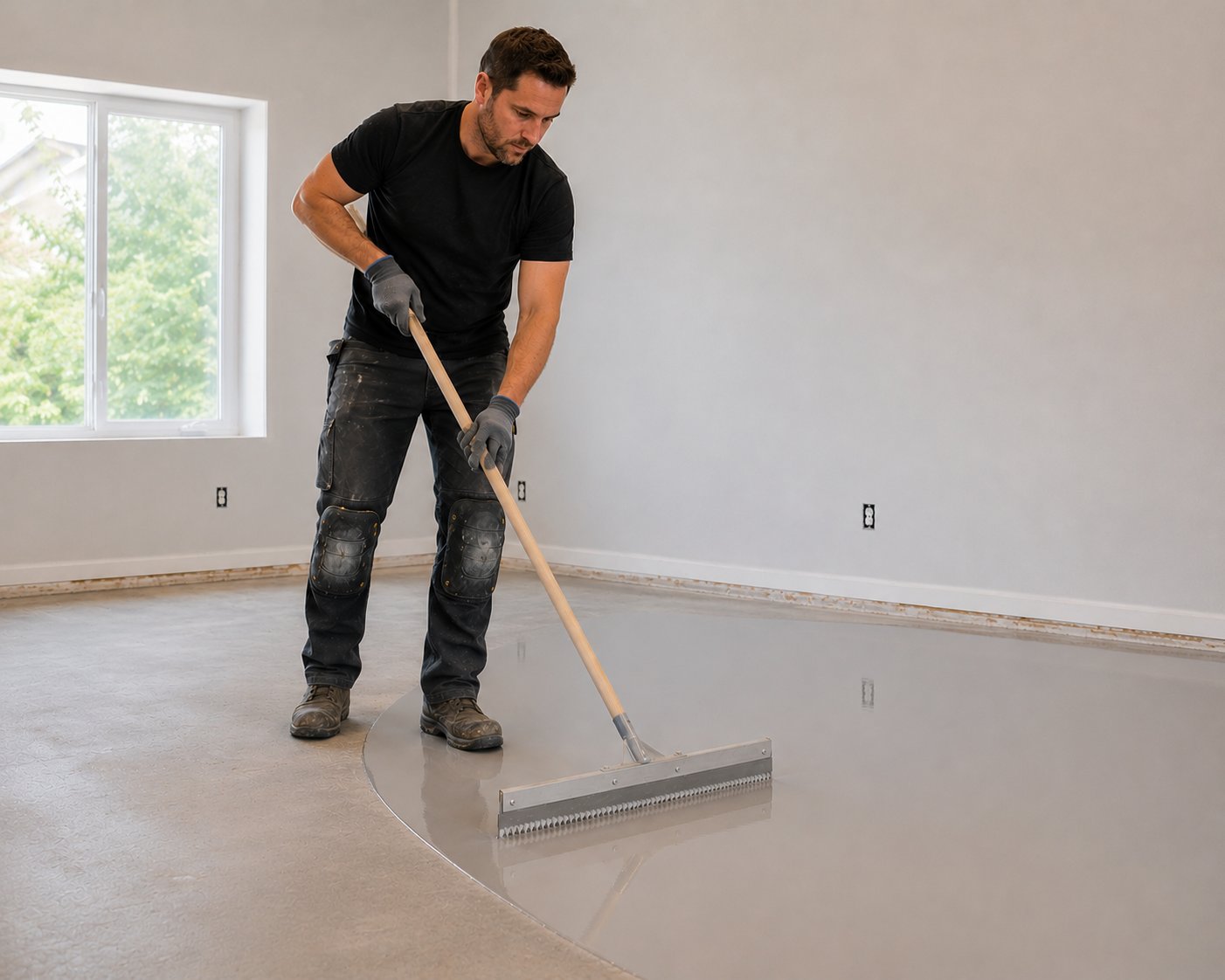
Damp or Unlevel Subfloor Before Fitting
What it means when our survey uncovers a damp or uneven subfloor, and how we prepare it properly.
It's one of the most common findings on a pre-fitting survey: the subfloor underneath the old carpet, vinyl or boards isn't flat, isn't dry, or both. It's not bad news exactly — it just means the job needs an extra stage before your new flooring goes down.
Skipping subfloor prep is the single biggest cause of flooring failures we see, from lifting LVT to squeaking laminate, so finding the issue before fitting rather than after is actually the better outcome.
Older Kent properties in particular often reveal a mix of issues in one survey — a solid concrete floor with historic damp alongside patches of old adhesive and screed repairs from several previous flooring changes — so it's rarely a single, simple fix.
Signs picked up during survey
- Moisture meter reading above the safe threshold for the chosen floor type
- Visible dips, humps or cracks across the concrete or boards
- Old adhesive residue or uneven screed left from a previous floor
- Hollow-sounding areas suggesting a delaminated or failed screed
Why damp and unevenness happen
Damp usually comes from residual construction moisture in newer screeds, a missing or damaged damp-proof membrane, or moisture rising from the ground in older solid floors. Unevenness is often just the accumulation of decades of small repairs, old adhesive, or a subfloor that was never levelled in the first place.
How we assess severity
We use a calibrated moisture meter against the flooring manufacturer's maximum reading, and a laser level to map high and low points across the room. This tells us whether we're dealing with a quick self-levelling compound job or a larger damp-proofing task.
Preparation options depending on the finding
| Subfloor finding | Typical preparation |
|---|---|
| Minor dips and bumps | Self-levelling compound |
| Elevated moisture reading | Damp-proof membrane (DPM) applied before flooring |
| Cracked or failed screed | Screed repair or localised re-screed |
| Old adhesive residue | Mechanical scraping/sanding before levelling |
Why we won't fit over an unresolved subfloor
Fitting flooring over a damp or uneven subfloor might look fine on day one, but it stores up problems — trapped moisture attacking adhesives, boards rocking on high spots, or floors that never quite sit flat. We'd rather flag it and fix it than hand back a floor that fails within the year.
Keeping the project on track
Subfloor prep adds time to a job, typically a day or more depending on drying times for compounds and membranes, but it's built into our quote once we know what we're dealing with, so there are no surprise costs mid-job.
Suspended timber subfloors versus solid concrete
A suspended timber subfloor brings different considerations to a solid concrete one — ventilation beneath the boards matters as much as the boards themselves, since blocked airbricks or poor underfloor ventilation can allow damp air to sit under the property and affect the timber from below.
Solid concrete floors, particularly in older properties without a modern damp-proof membrane, tend to show rising damp rather than ventilation problems, which is why the treatment approach and the products we specify differ depending on which type of subfloor we're dealing with.
It's also worth noting that not every damp reading calls for the same level of intervention — a borderline reading close to the flooring manufacturer's threshold might only need a lighter-duty moisture-management primer, while a significantly elevated reading points to a full damp-proof membrane, so the treatment is scaled to what's actually found rather than applied as a blanket approach.
Frequently asked questions
- Does finding a damp subfloor mean the job is off?
- No — it just means we treat it with a damp-proof membrane before laying your chosen flooring. It adds a stage to the job but doesn't stop it going ahead.
- How long does self-levelling compound need to dry?
- Typically 24 hours before light foot traffic and longer before flooring is bonded to it, depending on depth and the product used — we'll confirm the exact timing on site.
- Can I still choose any flooring type if the subfloor is damp?
- Most types can go down once treated correctly, but we'll advise if a particular product isn't suitable for the moisture levels found, and suggest an alternative that is.
- Will this cost extra on top of my flooring quote?
- We price subfloor prep as part of the overall quote once the survey findings are known, so you see the full cost upfront rather than as a surprise add-on later.
Keep reading
How to tell if a new screed is dry enough for flooring, and what happens if it isn't yet ready.
Why engineered wood floors cup, crown or gap, and the humidity and subfloor fixes that resolve it.
How to assess vinyl or laminate after a leak or flood, and when repair versus full replacement makes sense.
See how we survey, prepare and fit LVT across Kent.
See how we survey, prepare and fit vinyl across Kent.
Talk it through with a fitter, not a call centre
Book a free, no-obligation survey with Kent Flooring Warehouse's in-house fitting team — call 07702 737267 and we'll inspect the floor and give you a straight answer on the fix.