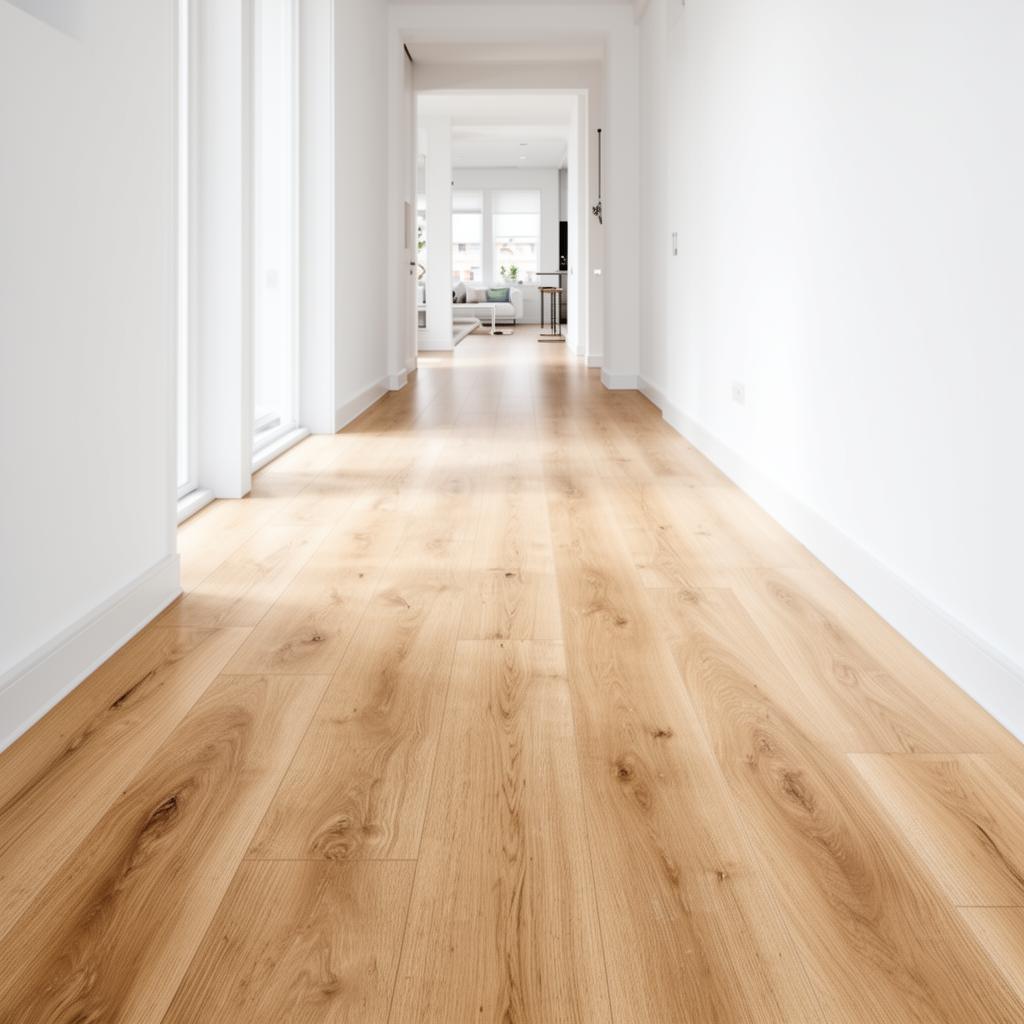
Laminate vs Engineered Wood
Laminate looks like wood but isn't — compare it against real engineered wood on feel, longevity and value.
Laminate and engineered wood sit at opposite ends of the same idea — a wood-look floating floor — but one is a printed image and the other is real timber. Customers usually ask about this when budget and authenticity are pulling in different directions.
It's worth being clear from the start: laminate is not a lesser version of engineered wood, it's a different product with its own strengths, and the right one depends on what you actually value in the finished room.
There's also a practical middle ground worth knowing about: some engineered wood ranges are designed with a thicker wear layer specifically so they can be treated more like laminate day-to-day, while still offering one or two future refinishes, which can suit customers who want a partial hedge between the two options.
The surface: printed image vs real timber
Laminate's surface is a high-resolution photographic layer of a wood grain, protected by a hard-wearing overlay — very convincing at a glance, but it is not real wood.
Engineered wood has an actual timber veneer as its top layer, so grain, colour variation and knots are genuine, and the floor will age and patina slightly like real wood does.
Longevity and refinishing
- Laminate cannot be sanded or refinished — once the overlay wears through or the surface is damaged, the board needs replacing.
- Engineered wood can typically be sanded and refinished a small number of times depending on veneer thickness, extending its usable life considerably.
- Both floors, properly cared for, offer many years of good service in normal domestic use.
Underfoot feel and sound
Laminate has a firmer, sometimes hollow-sounding feel unless paired with a good acoustic underlay, though quality has improved significantly in recent years.
Engineered wood tends to feel slightly warmer and more solid underfoot, closer to a genuine hardwood floor experience.
Value over time
| Attribute | Laminate | Engineered Wood |
|---|---|---|
| Surface | Printed image | Real timber veneer |
| Refinishing | Not possible | Can be refinished a few times |
| Guide cost band (supplied & fitted) | £ to ££ | £££ to ££££, guide only |
| Resale appeal | Good, budget-conscious buyers | Strong, often a selling point |
Moisture sensitivity
Neither product is waterproof, but engineered wood generally copes slightly better with normal household humidity than laminate's fibreboard core, provided standing water is avoided in both cases.
Which one makes financial sense
If you're flooring a rental property or a room where budget is the main driver, laminate delivers a great look for considerably less outlay.
If you're investing in a forever home and want a floor that can be refreshed rather than replaced in ten or fifteen years, engineered wood's higher upfront cost often works out better value long-term.
Fitting method and subfloor preparation
Laminate floats on underlay over almost any reasonably flat, dry subfloor, and its click-lock system makes it quick to lift and relay if needed, which is useful in rental or short-term settings.
Engineered wood can be floated, glued or, in some products, secret-nailed depending on the range and the subfloor, and glue-down or nailed installations generally give the most stable, longest-lasting result but require a more thoroughly prepared subfloor to start with.
Sound underfoot when walking with shoes on is also worth a mention: laminate can develop a slightly hollow click over time as the locking joints wear microscopically, while a well-fitted engineered wood floor, particularly a glued or nailed installation, tends to stay quieter and more solid-sounding for longer.
Frequently asked questions
- Can you tell the difference between laminate and engineered wood by looking?
- Good laminate can be very convincing from a distance, but up close the repeating pattern of a printed image versus the natural irregularity of real timber grain usually gives it away.
- Does engineered wood add more value to a home?
- It's often seen as a premium feature by buyers, though the impact on resale value varies by property and area — it's generally viewed more favourably than laminate.
- Is laminate noisier to walk on?
- It can sound slightly hollower than engineered wood without a good underlay, but a quality acoustic underlay largely resolves this for both floor types.
- How many times can engineered wood be refinished?
- This depends entirely on the thickness of the real wood veneer layer — thicker veneers can typically be sanded two or three times, while thinner veneers may not tolerate refinishing at all. We can advise on specific products.
Keep reading
Choosing between LVT and engineered wood? Compare looks, water tolerance, refinishing and lifespan before you buy.
LVT or laminate? Compare water resistance, feel underfoot, durability and guide costs to pick the right floor for your room.
Herringbone or straight plank LVT? Compare visual impact, waste, fitting time and cost for your layout.
See how we survey, prepare and fit laminate across Kent.
See how we survey, prepare and fit engineered wood across Kent.
Talk it through with a fitter, not a call centre
Speak to our fitters about which option suits your budget and timeline — book a free survey on 07702 737267.