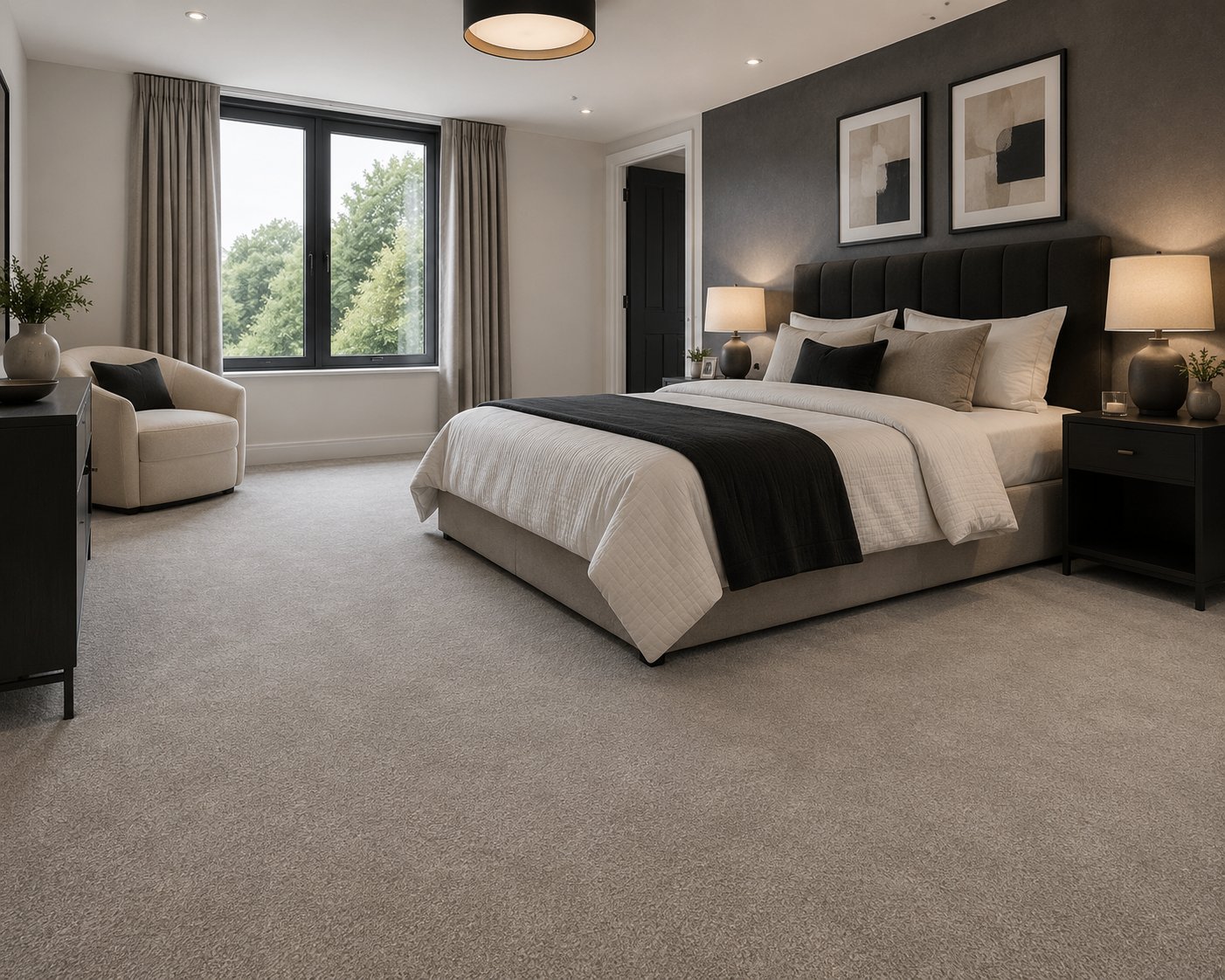
Wool vs Polypropylene Carpet
Wool or polypropylene carpet — compare feel, stain resistance, price and durability before you choose.
Wool and polypropylene sit at two different points on the carpet spectrum — one a natural fibre prized for feel and appearance, the other a synthetic engineered specifically for stain resistance and value.
Neither is objectively 'better'; the right one depends on whether you're prioritising natural luxury underfoot or practical, budget-friendly resilience against everyday family life.
Static electricity is a smaller but real consideration too: some synthetic carpets can generate more static in dry, centrally heated homes than wool, which has a natural moisture content that helps dissipate static charge, though many modern polypropylene ranges include anti-static treatments to address this.
Feel and appearance
Wool has a natural softness, depth of colour and slight resilience that's genuinely difficult for synthetic fibres to fully replicate, and it tends to retain its appearance and spring for longer.
Polypropylene has improved hugely in softness over recent years, particularly in twist and saxony constructions, though it still generally feels slightly different to genuine wool.
Stain resistance and practicality
- Polypropylene is inherently stain-resistant at a fibre level, since it doesn't readily absorb liquids the way natural fibres can — this makes it a popular choice for households with young children.
- Wool is more absorbent and can stain more readily from spills like wine or coffee if not treated quickly, though many wool carpets come with a stain-resistant treatment applied.
- Wool is naturally flame-resistant and has good soil-hiding properties from its fibre structure, which helps it look cleaner for longer between vacuums.
Durability and lifespan
Wool carpet, when well maintained, is renowned for its longevity and ability to bounce back from crushing under furniture, often outlasting synthetic alternatives in the same conditions.
Polypropylene performs well under everyday wear but can be more prone to permanent flattening (pile crush) in heavy-traffic areas over time compared with wool.
Cost comparison
| Attribute | Wool | Polypropylene |
|---|---|---|
| Stain resistance | Good with treatment, but absorbent | Naturally stain-resistant |
| Feel underfoot | Naturally soft, resilient | Improved but generally firmer |
| Pile recovery | Excellent, bounces back well | Can flatten under heavy traffic |
| Guide cost band (supplied & fitted) | £££ to ££££, guide only | £ to ££, guide only |
Allergies and environmental factors
Wool is a natural, renewable fibre and is often chosen by customers wanting a more sustainable material, though it can hold allergens like any fibre carpet without regular vacuuming.
Polypropylene is a synthetic petroleum-based fibre; it's easier to clean thoroughly and doesn't harbour moisture the way wool can in damp conditions.
Blends and how manufacturers combine the two
Many carpets sold today are blends rather than pure wool or pure polypropylene, most commonly wool mixed with a synthetic such as nylon, aiming to combine wool's natural look and resilience with improved stain resistance and a lower price point than pure wool.
The percentage of wool in a blend affects both feel and price roughly proportionally, so it's worth asking for the exact fibre composition when comparing samples rather than judging purely by the word 'wool' on the label.
Sound absorption is broadly similar between the two when pile density and underlay are comparable, though wool's natural fibre structure and typically denser construction in premium ranges can give it a very slight edge in noise reduction over budget polypropylene ranges with a thinner pile.
Frequently asked questions
- Is wool carpet worth the extra cost?
- For many households, yes — wool's longevity, appearance retention and natural feel justify the higher price, particularly in living rooms and bedrooms where quality underfoot matters most.
- Is polypropylene carpet good for families with kids?
- It's a popular choice for exactly this reason — its natural stain resistance makes everyday spills far less stressful, and it's generally more budget-friendly for larger areas of the home.
- Can wool carpet be fitted on stairs?
- Yes, wool or wool-blend carpets are widely used on stairs and are valued for their durability, though a proper stair-rated construction and underlay are essential regardless of fibre type.
- Do wool-blend carpets combine the benefits of both?
- Wool-rich blends (often wool with a small synthetic content) aim to combine wool's natural feel and durability with some of the practical stain resistance of synthetic fibres, and are a popular middle-ground option.
Keep reading
Deciding between carpet and LVT for a bedroom? Compare warmth, comfort, allergies and upkeep before you commit.
Contract-grade or domestic carpet — understand construction, durability and where each is actually needed.
Foam, rubber, fibre or PU underlay: which feels softest, which quietens a flat, which lasts on stairs, and which one suits underfloor heating in your home.
See how we survey, prepare and fit carpet across Kent.
Talk it through with a fitter, not a call centre
See and feel wool and polypropylene samples side by side at a free home survey — call 07702 737267.