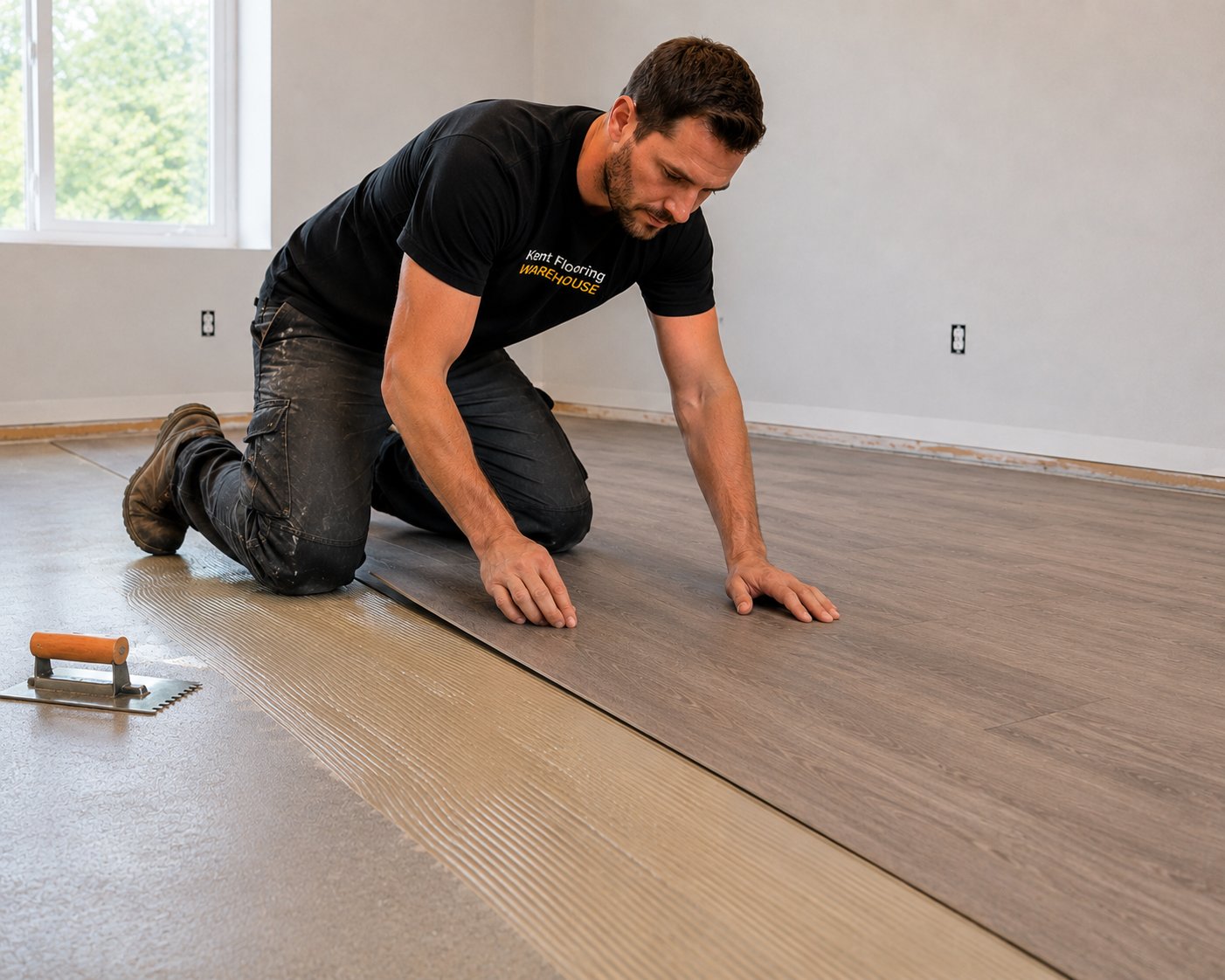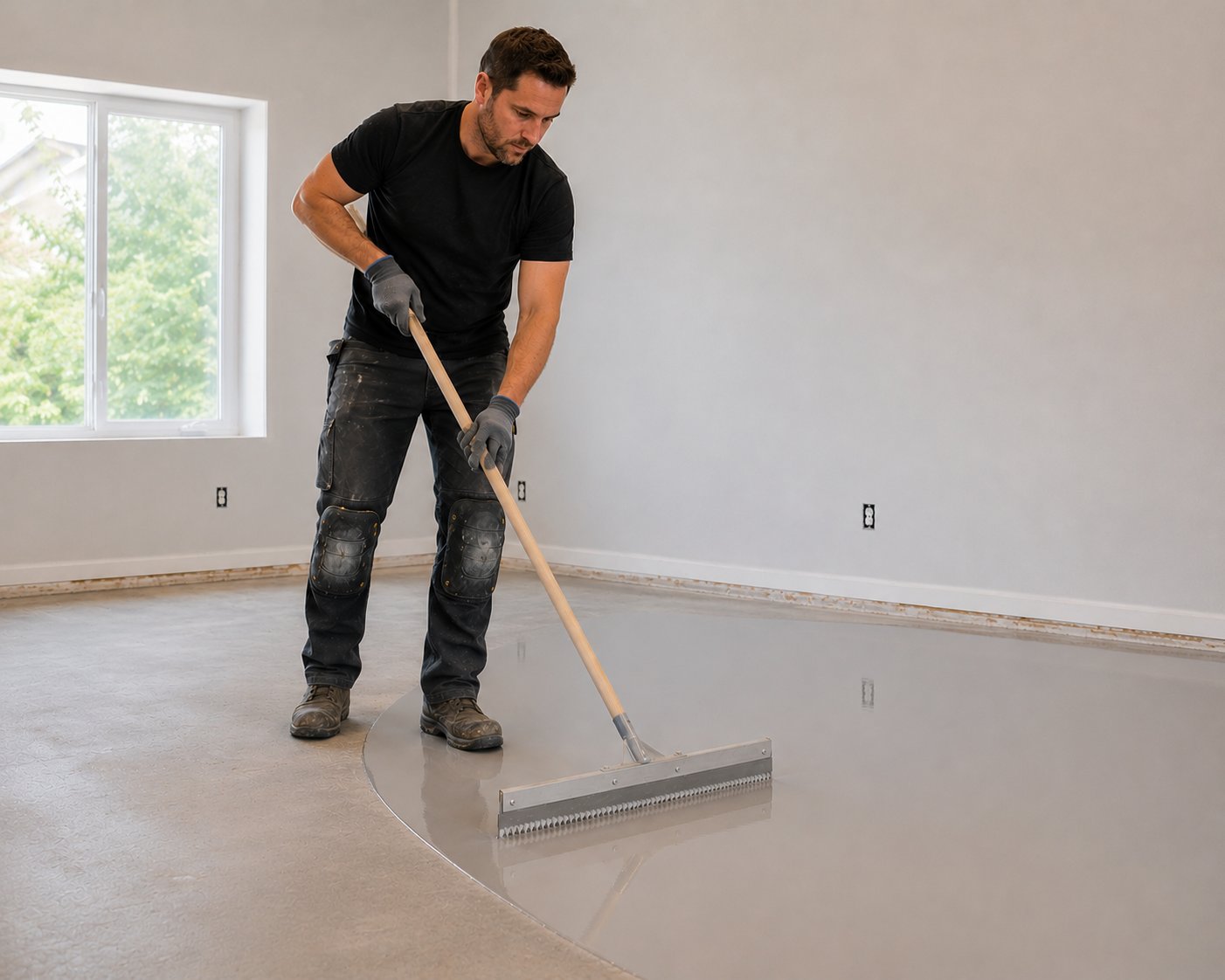
damp-proof membrane in a Rochester property near Wouldham, ME1 (detail and context)

Subfloor preparation · Rochester, ME1

Damp-Proof Membranes Before New Flooring — Rochester

How a liquid or sheet damp-proof membrane protects new flooring in Rochester when moisture readings come back too high before fitting.

  • Free survey and measure
  • Fitted by our own team
  • Preparation priced in writing
  • Rochester and ME1 covered
Subfloor preparation page — Explains when a surface damp-proof membrane is needed on a floor in Rochester and how it is applied over concrete or screed.

Timber suspended floors turn up often enough in Wouldham that we treat squeaks and springiness as a screwing-down and packing job first, before any covering gets discussed.

A damp-proof membrane, or surface DPM, is applied to a concrete or screed floor when moisture readings come back higher than the floorcovering and adhesive manufacturers allow. It is a liquid epoxy or resin coating that seals the surface, stopping residual moisture from rising into the new floor and damaging it.

What we do, and when we do it

  1. Step 1

    Test moisture

    Carry out hygrometer testing across the floor to establish accurate relative humidity readings.

  2. Step 2

    Prepare the surface

    Mechanically prepare the concrete or screed to remove laitance and open a key for the epoxy.

  3. Step 3

    Apply the DPM

    Roll or trowel on one or two coats of epoxy DPM, broadcasting sand between coats if required.

Moisture testing before deciding on a DPM

A DPM is only applied where testing shows it is genuinely needed. Standard practice for resilient flooring follows the moisture testing approach set out in BS 8203, using a hygrometer to measure relative humidity within the slab rather than relying on a surface damp meter alone, which only gives an indicative reading.

  • Hygrometer boxes are sealed to the floor for the manufacturer's stated conditioning period
  • Readings are taken once the reading has stabilised, not immediately
  • Multiple test points are used across larger areas, not just one corner
  • Results are compared against the flooring and adhesive manufacturer's maximum RH figure

Applying a surface epoxy DPM

The floor is first prepared mechanically, usually by shot-blasting or grinding, to remove laitance and open the surface so the epoxy can key properly. The DPM is then rolled or trowelled on in one or two coats, sometimes with a sand broadcast between coats to give the finished flooring or its adhesive something to bond to.

StepPurpose
Mechanical preparationRemoves laitance and opens the concrete for a mechanical key
First epoxy coatSeals the surface against rising moisture
Sand broadcast (if needed)Gives a keyed surface for latex or adhesive to bond to
Second epoxy coatBuilds full film thickness for reliable protection
Latex or levelling coatApplied on top once epoxy has cured, ready for flooring

The detail we record on site

  • Get a proper hygrometer moisture test rather than relying on a surface meter alone
  • Identify and fix any active leak before a DPM is applied over the top
  • Confirm the floor has been mechanically prepared before the DPM coat goes on
Damp-proof Membrane detail photographed on a Rochester project (corner detail)

Where the van goes for damp-proof membrane

Places we visit

  • Cuxton
  • Wouldham
  • Horsted
  • Delce
  • Borstal

Routes we use

  • M2 Junction 2
  • A2
  • A228

Postcode district ME1, Medway Council.

Sites and units

  • Rochester High Street
  • Medway City Estate
  • Esplanade

What lies under Rochester floors

Timber suspended floors turn up often enough in Wouldham that we treat squeaks and springiness as a screwing-down and packing job first, before any covering gets discussed.

Timber suspended floors turn up often enough in Wouldham that we treat squeaks and springiness as a screwing-down and packing job first, before any covering gets discussed.

Why floors test damp

  • New concrete slabs can take many months to dry out fully depending on thickness
  • Older solid floors may have no effective original damp-proof course
  • Water ingress from plumbing leaks or flooding raises moisture in the slab
  • Poor ventilation under suspended floors can push moisture into adjoining screeds
  • Sheds, extensions and conservatories on newer slabs are common areas for high readings

How the work looks up close

Damp-proof Membrane detail photographed on a Rochester project (corner detail)
Preparation stage on a damp-proof membrane job in the ME1 area (before fitting)
The finished damp-proof membrane under natural light (finished floor)

These are our own installations in the county. They illustrate the type of work covered on this page rather than a particular job.

Why Rochester customers choose us for damp-proof membrane

  • Supplied direct from our own warehouse stock.
  • One point of contact from survey through to the finished floor.
  • Old floor uplift and disposal agreed in writing before the fitting date.
  • Trims, thresholds and beading specified at survey, not chosen on the day.
  • Written quotation setting out materials, preparation and fitting separately.
Where we are

Unit 9, Matilda Close, Gillingham Business Park, Gillingham

We reach Rochester via the A228, and cover the wider ME1 district as part of our normal round.

Clearing up the common questions

How do I know if my floor needs a damp-proof membrane?

A hygrometer moisture test will show whether the relative humidity in the slab exceeds the level the flooring and adhesive manufacturers allow. If it does, a DPM is the usual solution rather than waiting for the floor to dry out on its own.

Will a DPM fix a leak under my floor?

No, a DPM protects new flooring from residual moisture but it will not stop an active leak. Any ongoing water source needs to be identified and fixed before flooring work goes ahead.

Can carpet be fitted over a damp-proof membrane?

Yes, once the DPM has cured and the surface is suitably levelled, carpet can be fitted on appropriate underlay in the normal way.

How long does an epoxy DPM take to cure in Rochester?

Cure time depends on the product, temperature and ventilation on site, so we confirm timings for your job in Rochester once the coats are applied rather than quoting a fixed figure in advance.

Closing summary

A surface damp-proof membrane protects new flooring from residual moisture in a concrete or screed base. Testing first in Rochester confirms whether one is actually needed.

Concerned about a damp floor in Rochester?

Book a free survey and we will carry out proper moisture testing before recommending anything.

Free quote