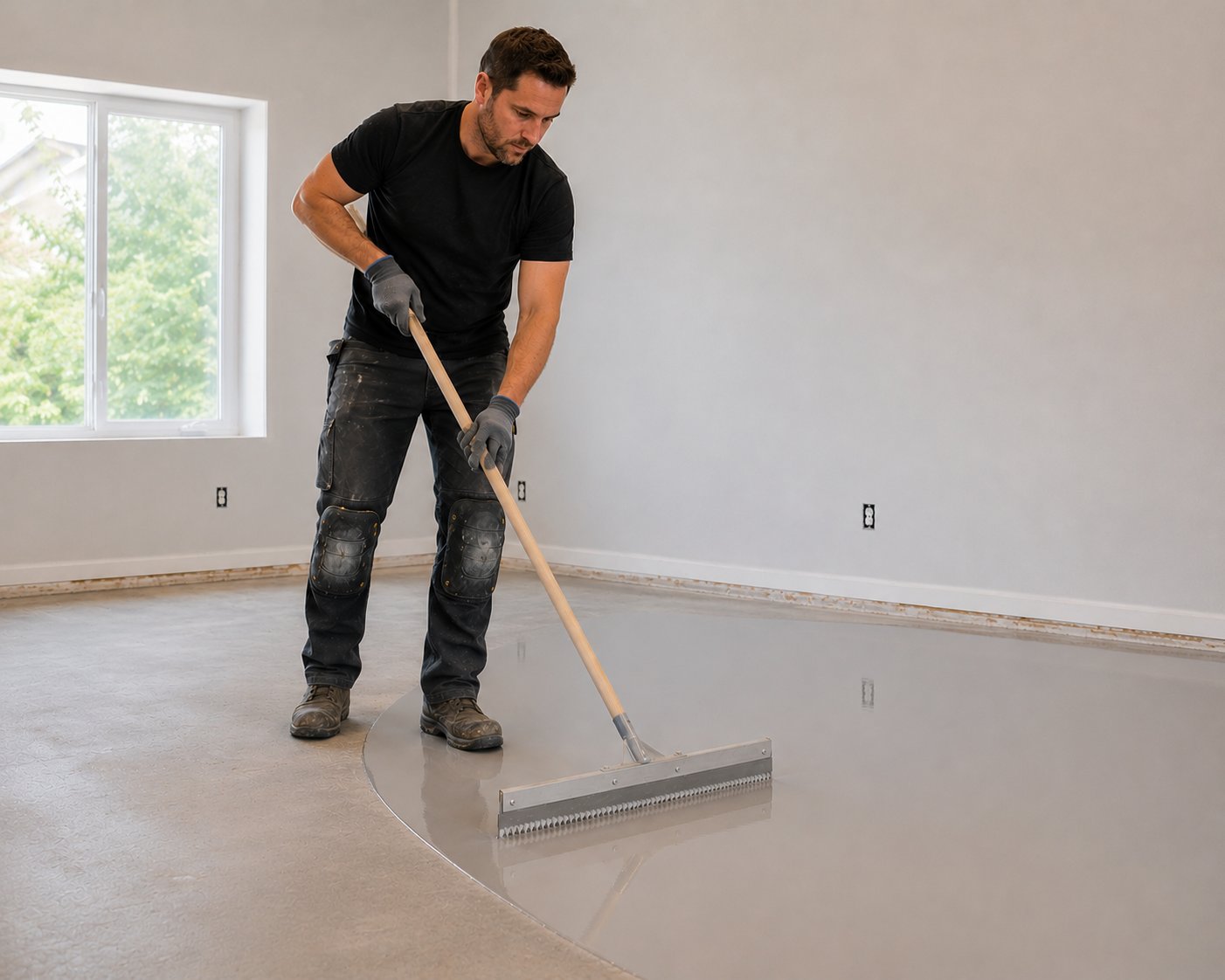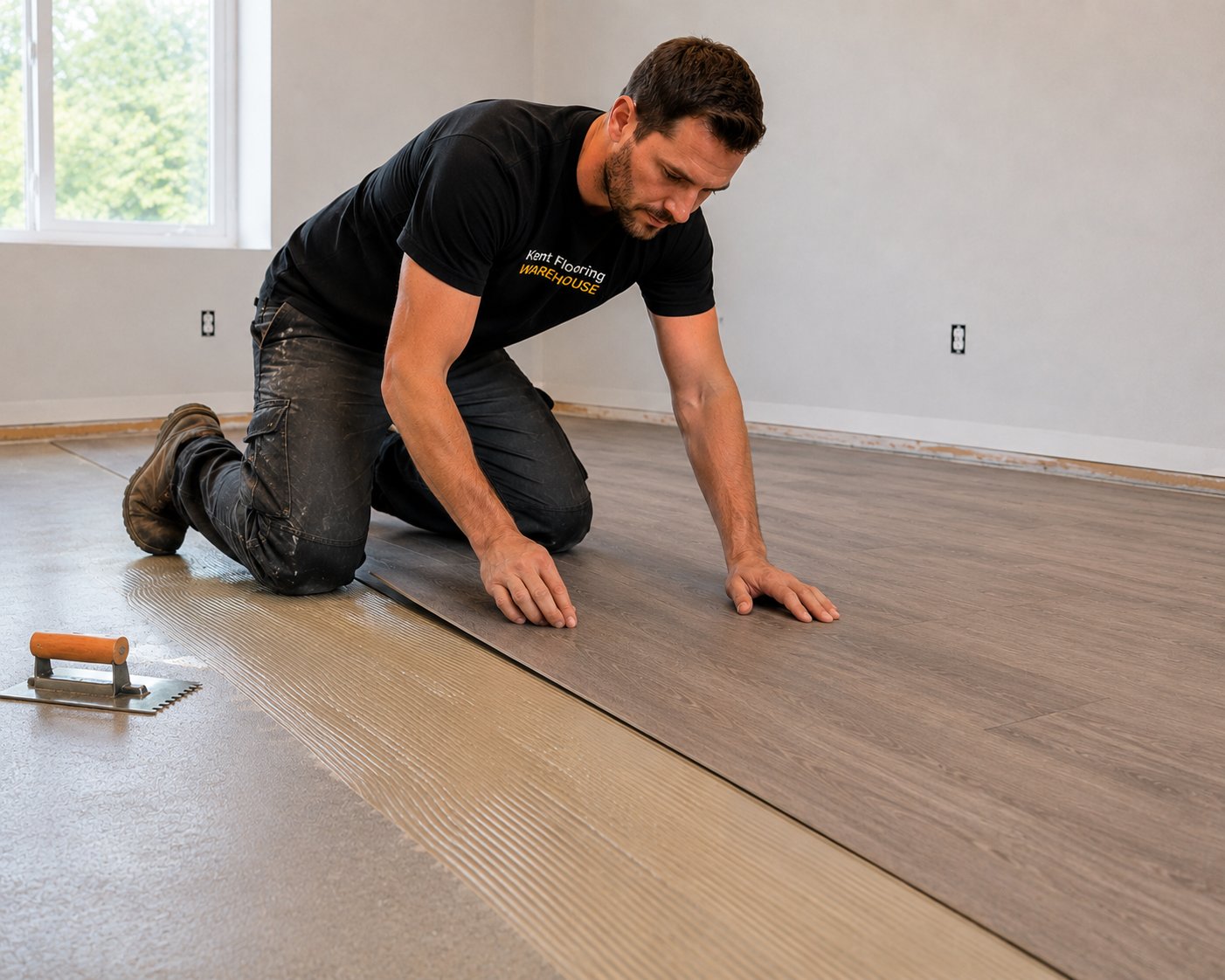
Lifting LVT Repair viewed across the finished room, Rochester (wide shot)

Faults & repairs · Rochester, ME1

LVT Lifting or Peaking? Here's What's Actually Wrong — Rochester

LVT lifting at the seams or edges in Rochester? We diagnose adhesive failure, heat or moisture first, then repair or replace only what's needed.

  • Free survey and measure
  • Fitted by our own team
  • Preparation priced in writing
  • Rochester and ME1 covered
Fault diagnosis & repair page — For anyone in Rochester with LVT planks or tiles lifting, peaking or curling at the edges who needs to know if it can be stuck back down or has to be replaced.

Kent clay subsoil under parts of Rochester shifts with the seasons, and that movement can reopen a repair that looked complete the previous year.

LVT that lifts at the seams almost always points to one of two things: the adhesive has failed, or the floor is moving underneath it. Both look similar from above but need completely different fixes, so the first job is always working out which one you've got before touching a plank in a Rochester property.

What causes it in Rochester properties

Kent clay subsoil under parts of Rochester shifts with the seasons, and that movement can reopen a repair that looked complete the previous year.

Kent clay subsoil under parts of Rochester shifts with the seasons, and that movement can reopen a repair that looked complete the previous year.

How we test before we touch anything

A survey starts with a moisture reading on the subfloor, because if damp is the root cause, repairing the LVT without addressing the moisture just buys a few months. We also check for a DPM on solid floors and ask about the fitting date and any known leaks or spills nearby.

Sound-testing the floor with a light tap tells us how much of it is hollow underneath versus properly bonded. A few isolated hollow tiles near a doorway is a different job to widespread drumming across a whole {town} room.


What can be repaired vs what needs relaying

SymptomLikely causeTypical remedy
Single tile curling at one cornerLocalised adhesive failureLift, re-adhere or replace that tile only
Peaking ridge along one seamNo expansion gap / thermal movementCut relief gap, re-lay affected planks
Widespread hollow sound across roomBulk adhesive failure or moisture ingressFull uplift and relay, subfloor re-tested first
Lifting concentrated near a wet areaMoisture ingress or missing DPMInvestigate moisture source before any repair
Bubbling under underfloor heating zonesAdhesive not rated for UFH, overheatingCheck UFH settings, relay with correct adhesive

Booking, prep, fit, finish

  1. Step 1

    Moisture test the subfloor

    Establish whether damp is driving the fault before any repair is planned.

  2. Step 2

    Sound and visually survey the whole floor

    Map how much of the floor is affected, not just the visible spot.

  3. Step 3

    Confirm repair or relay

    Agree honestly whether isolated repair will hold or a full relay is needed.

Pictures from recent jobs

Lifting LVT Repair detail photographed on a Rochester project (underside view)
Doorways prepared ahead of fitting in Rochester (pre-fit checks)
Finished LVT floor near Horsted, Rochester (job finished)

Our own photographs, used to show construction detail and finish. They are illustrative rather than tied to a specific property.

Everything the survey captures

  • Note whether the lifting is one tile, one seam, or spread across the room before you call
  • Check if the lifting started near a radiator, window or known damp area in Rochester
  • Avoid gluing tape or filler over lifted edges, it hides the real fault
Lifting LVT Repair detail photographed on a Rochester project (underside view)

Why LVT lifts: the real causes

  • Adhesive failure — poor initial bond, wrong adhesive for the substrate, or adhesive laid too thick or thin
  • Thermal movement — LVT expands and contracts with temperature more than most flooring, and glue-down floors need the right adhesive to accommodate it
  • Insufficient expansion gap — click LVT laid tight to walls or fixed obstacles with no room to move
  • Subfloor moisture ingress — moisture reaching the back of the plank breaks down the adhesive bond over time
  • Missing or failed damp proof membrane on solid floors, letting residual slab moisture attack the adhesive
  • Underfloor heating cycling too fast or too hot, stressing the bond repeatedly

Care, tidiness and communication

  • Subfloor preparation written into the quote rather than added later.
  • Supplied direct from our own warehouse stock.
  • One point of contact from survey through to the finished floor.
  • Old floor uplift and disposal agreed in writing before the fitting date.
  • Trims, thresholds and beading specified at survey, not chosen on the day.
Where we are

Unit 9, Matilda Close, Gillingham Business Park, Gillingham

We reach Rochester via the A228, and cover the wider ME1 district as part of our normal round.

Local coverage in detail

Areas

  • Borstal
  • Cuxton
  • Wouldham
  • Delce
  • Horsted

Roads we take

  • M2 Junction 2
  • A2
  • A228

Postcode district ME1, Medway Council.

Sites and units

  • Rochester High Street
  • Medway City Estate
  • Esplanade

lifting LVT repair questions we get asked in Rochester

Can lifting LVT just be stuck back down?

Sometimes, yes, if it's a small area and the subfloor is dry. But if the original adhesive failed for a reason that's still present, re-gluing the same spot often fails again within months.

Why is my LVT peaking in one spot?

Peaking is almost always a thermal expansion problem, usually because the floor was laid without enough gap at a wall, door threshold or fixed object. The fix is cutting relief and re-laying the affected run.

Is it worth repairing old LVT that's discontinued?

It can be, if the affected area is small and slightly mismatched colour is acceptable. For larger areas or where colour matching is important, a full relay with new material is usually the better route.

Does underfloor heating cause LVT to lift?

It can, particularly if the adhesive used wasn't rated for UFH or the heating is cycled too aggressively. We check the adhesive spec and heating settings as part of the survey.

The gist

Lifting LVT in Rochester is fixable more often than people expect, but only once the actual cause is known. A quick survey saves you paying twice.

Get your Rochester LVT looked at properly

A free survey identifies the actual cause before we talk about fixing it.

Free quote