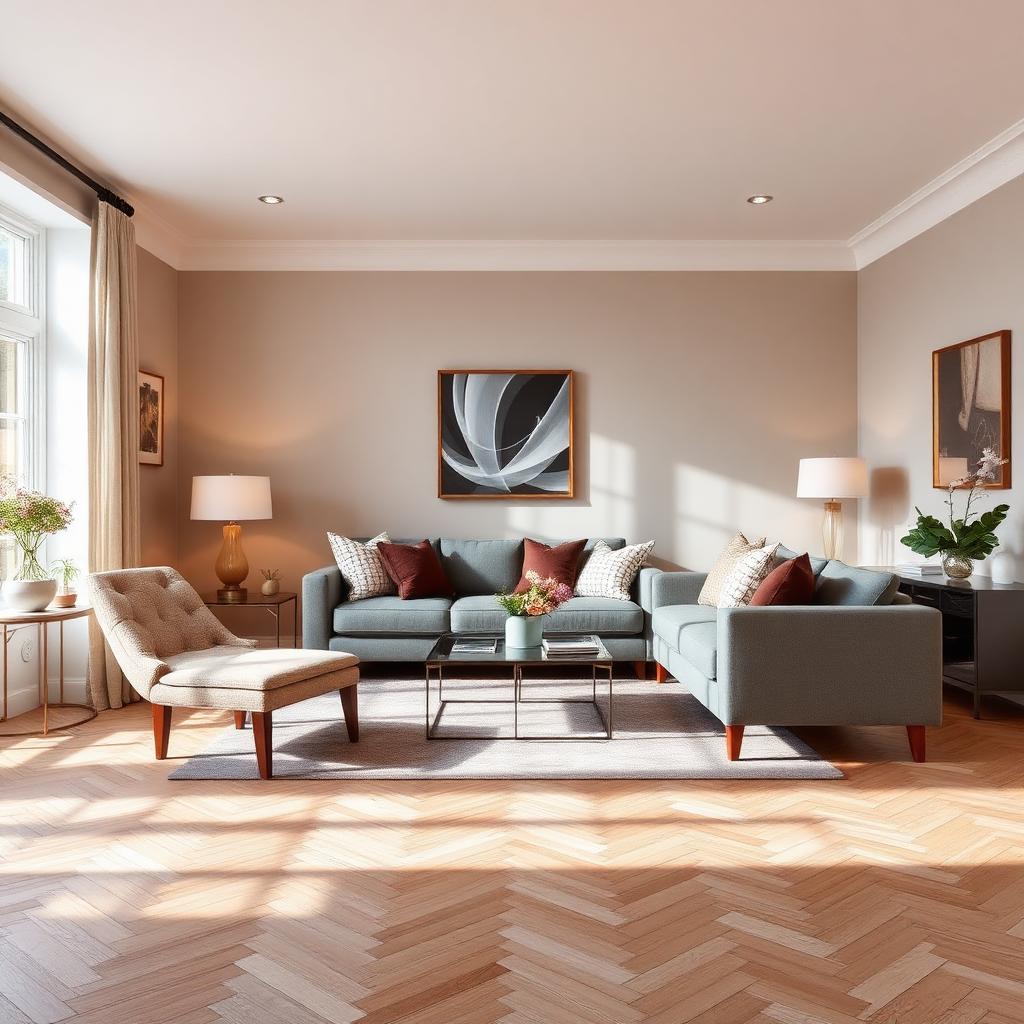
Flooring That Survives Pets and Young Children
Claw scratches, accidents, spills and slips. Which floors cope with dogs, cats and young children, which fail early, and the detail that keeps them safe.
Pets and children stress a floor in opposite directions. Claws and grit attack the surface, while accidents and spills attack the joints and whatever sits underneath. A floor that handles one and not the other still gets replaced early.
There is also a safety side that rarely gets discussed until after fitting: how slippery a wet hard floor is under a running child or a dog turning at speed.
The two failure modes to design against
Surface damage is scratching, gouging and pile flattening. Joint and substrate damage is liquid getting through a seam and staying there, which is what causes the smell that never quite leaves a carpet and the swelling that ruins a laminate.
Choose for whichever risk is higher in that room. A puppy in a hallway is a joint problem. A cat in a bedroom is a surface problem.
How the options cope
| Floor | Claws and scratches | Accidents and spills |
|---|---|---|
| Glue-down LVT | Very good, thicker wear layers resist claws | Very good, sealed joints and no absorbent layer |
| Sheet vinyl | Good, can indent under sharp points | Excellent, no joints in a small room |
| Laminate | Fair, scratches show on dark decors | Poor, joints swell and cannot be dried out |
| Engineered wood | Fair, marks but can be refinished | Poor to fair, needs immediate mopping |
| Polypropylene carpet | Good, fibres are hard-wearing | Fair, bleach-cleanable ranges help a great deal |
| Wool carpet | Good, recovers well | Poor, wool absorbs and holds odour |
Slip safety with children and dogs in the house
- Textured or embossed LVT gives more grip than a high-gloss finish when wet
- Keep a mat at the back door where wet paws come in, not just the front
- Consider slip-rated flooring in a utility room or downstairs shower room
- Avoid loose rugs on hard floors at the bottom of stairs unless they are gripped
Carpet choices that survive a family
Bleach-cleanable polypropylene in a loop or short twist pile is the practical family carpet. Avoid long, loose piles that claws pull into snags, and choose a mid-tone flecked colour over a plain pale one, which shows every mark. Underlay matters too, since a good one keeps the pile standing up for longer.
Sound and comfort for babies and toddlers
Hard floors are noisier and colder for crawling. A common approach is hard floor in the kitchen and hallway where the mess happens, and carpet in bedrooms and the playroom where the comfort matters. If it must be hard throughout, a good acoustic underlay makes a noticeable difference in a flat.
Small habits that add years
- Trim claws and keep a towel by the door in wet weather
- Deal with accidents immediately, blotting rather than rubbing on carpet
- Felt pads under furniture, and lift rather than drag toy boxes
- Keep a spare box of LVT tiles or a carpet offcut so a damaged area can be patched invisibly
Frequently asked questions
- What is the single best floor for a dog?
- Glue-down LVT with a thick, textured wear layer. It resists claws, gives grip and nothing soaks in.
- Will dog claws scratch laminate?
- They can, and it shows most on dark, high-gloss decors. Textured matt finishes hide it far better.
- Is any carpet safe with a puppy?
- Bleach-cleanable polypropylene with a waterproof-backed underlay is the realistic choice while training is ongoing.
- Does underfloor heating help with crawling babies?
- It takes the chill off a hard floor and pairs well with LVT, though it does not replace the softness carpet gives in a bedroom.
Keep reading
A three-way comparison of carpet, LVT and laminate on wear, water, comfort, noise, subfloor demands, fitting time and long-term cost, with the weaknesses left in.
Wool or polypropylene carpet — compare feel, stain resistance, price and durability before you choose.
Which floors survive a front-door hallway: grit, wet shoes, pushchairs and a narrow run that shows every join. Materials, layout and matting compared.
See how we survey, prepare and fit LVT across Kent.
See how we survey, prepare and fit carpet across Kent.
Talk it through with a fitter, not a call centre
Book a free measure from our Gillingham warehouse and we will bring samples of the options discussed here, check the subfloor and leave you with a written quote.