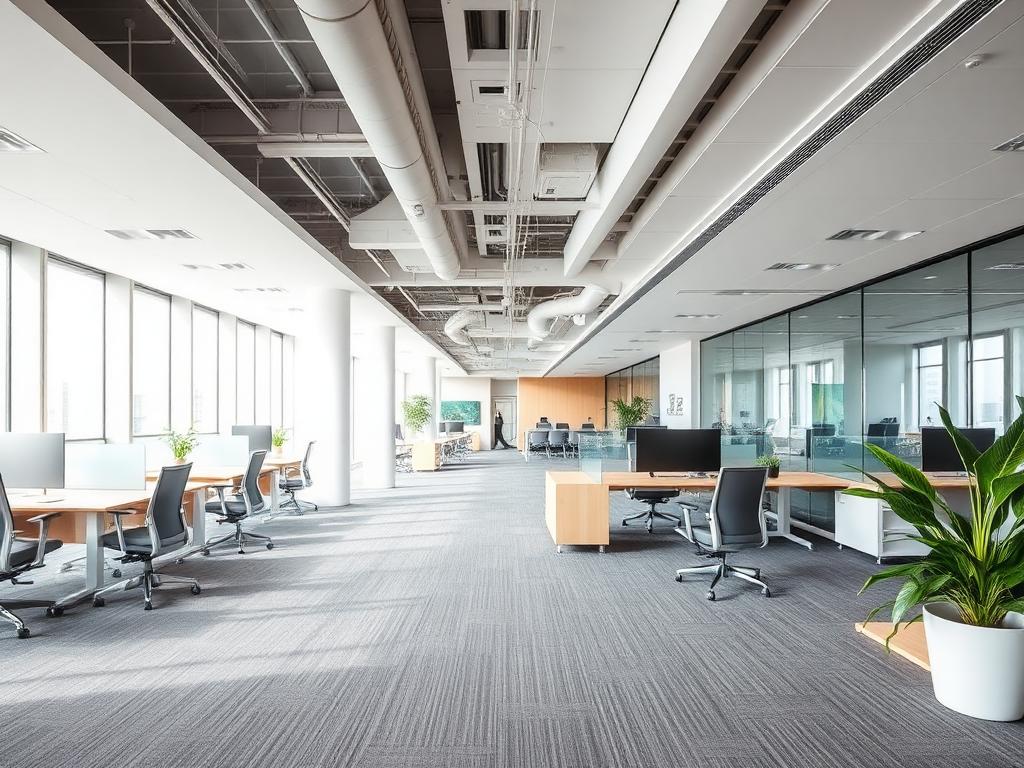
Carpet tiles, supplied and fitted
Carpet tiles supplied and fitted across Kent. Tackifier fixing, attic stock, monolithic and quarter turn laying. Free measuring and written quotes.
Carpet tiles are a modular floor built from a bitumen or PVC backed tile, usually 500mm square, sometimes a plank format, glued down with a low tack pressure sensitive adhesive called a tackifier rather than a wet spread adhesive. That single difference changes everything about how the floor behaves day to day. A tile lifts clean with a flooring knife and a bit of persuasion, it does not need scraping, soaking or grinding, and that is the entire point of choosing this product over broadloom carpet or a fully bonded floor.
The backing carries most of the performance. Bitumen backed tiles are heavier, sit flat under their own weight and resist curling at the edges, which suits open plan offices with long uninterrupted runs. PVC backed tiles are lighter, more dimensionally stable in fluctuating temperatures, and tend to be the choice where a raised access floor needs frequent lifting for cabling. Neither backing is right or wrong, the choice depends on how often the floor below needs opening up and how the space is heated and cooled.
We supply and fit carpet tiles across Kent for offices, reception areas, meeting rooms, schools and any commercial floor where sections get walked, wheeled and spilled on unevenly. Domestic use exists but it is rare and usually a home office or basement. Our own fitters set out the grid, control dye lots so tiles from the same batch sit together, and leave attic stock so a damaged tile can be swapped in minutes rather than the whole room being re-carpeted.
Bitumen backing against PVC backing, and why the choice matters underfoot
Bitumen backed tiles are the traditional heavy hitter, dense, stable and self weighting, so they resist ripple and stay flat across a big open floor without needing full bond adhesive everywhere. They are also relatively unforgiving of a poor subfloor, telegraphing dips and high spots more readily because the tile itself does not flex to hide them. PVC backed tiles are lighter and slightly more forgiving of minor subfloor irregularity, and because they are less dense they are easier to lift repeatedly without the backing crumbling at the edges, which matters where access floor tiles get pulled up every few months for re-cabling.
Neither backing changes the pile on top much, that is usually a tufted loop or cut pile in a similar range of finishes either way, so the decision is really about the subfloor, the amount of future lifting expected and the building's thermal movement, not about looks.
- Bitumen backing: heavier, flatter, better for large open runs with little future lifting
- PVC backing: lighter, more dimensionally stable, better where tiles come up regularly
- Bitumen can telegraph subfloor high spots more than a cushioned PVC tile
- PVC tiles handle repeated lifting over raised floor voids with less edge damage
- Both take the same tackifier adhesive, so the choice does not affect the fixing method
Tackifier fixing and why the tiles stay put without being glued down solid
A tackifier is a pressure sensitive adhesive spread thinly and left to go off tacky rather than wet. It never fully cures hard the way a wet lay carpet adhesive does, it stays permanently slightly sticky, which is what lets a tile be peeled up years later without soaking or scraping. This is the mechanism behind the whole modular concept, and it is why carpet tiles cannot be treated like glue down broadloom when it comes to spec or aftercare.
Because the bond is deliberately low tack, tiles can shift slightly under heavy castor traffic or furniture dragging if the tackifier has been applied too thin or has aged past its working life, usually many years, which is why a re-tackify is sometimes needed on a heavily used floor long before the tiles themselves are worn out.
Laying patterns: monolithic, quarter turn, ashlar and brick
Monolithic laying keeps every tile the same way round, pile direction aligned, which gives a uniform flat colour with visible directional shading under different light, similar to how carpet pile shades. Quarter turn rotates each adjacent tile ninety degrees, which breaks up that directional shading into a subtle chequerboard texture and is the most common pattern for plain commercial tiles because it hides seams and wear paths better than monolithic.
Ashlar and brick patterns are used more with plank format tiles, staggering the joints like masonry or timber flooring so no long straight seam line runs across a busy walkway. The pattern chosen at install has to be documented, because when a tile is replaced later from attic stock it needs to go back in the same orientation or the join will show as a visible patch even with a perfect colour match.
- Monolithic: all tiles same way round, shows directional pile shading
- Quarter turn: each tile rotated 90 degrees, breaks up shading, most common for offices
- Ashlar: plank tiles offset like brickwork, avoids long straight seams
- Brick: plank tiles staggered end to end, good for corridors and busy runs
Dye lot control and why attic stock has to be kept from the same batch
Carpet tile colour is dyed in batches, and even a small shift between production runs is visible once tiles from two different dye lots sit side by side, especially under office lighting. A proper install controls this by laying an entire room from one dye lot and recording the batch number, then setting aside spare tiles, known as attic stock, from that same batch for future repairs rather than relying on whatever the manufacturer happens to be making years later.
This is one of the biggest practical differences between carpet tiles and broadloom carpet. A stain or burn in broadloom usually means patching a whole area or re-carpeting a room, whereas a single damaged carpet tile can be lifted and swapped from attic stock in minutes, provided that stock exists and was stored flat, out of light, from day one.
| Floor area | Typical attic stock | Storage note |
|---|---|---|
| Small office, under 50m2 | 10 to 15 spare tiles | Store flat, stacked, away from direct sunlight |
| Medium office, 50 to 200m2 | 20 to 40 spare tiles | Keep with batch and pattern orientation noted |
| Large floor plate, over 200m2 | 5 percent of total tiles laid | Split stock between site and off site storage |
Cable access under raised floors and why PVC backed tiles suit it
Offices with raised access floors need to lift tiles routinely as cabling changes, desk layouts move and power or data points get added. Because carpet tiles sit loose on tackifier rather than being fully bonded, individual tiles come up cleanly over an access floor panel without disturbing the tiles around it, then go straight back down onto the same tacky residue.
PVC backed tiles tend to hold up better to this repeated lifting because the backing does not crumble or delaminate at the corners as quickly as some bitumen backed products can after dozens of lift and relay cycles. On a floor where cable access is a regular event rather than a one off, that durability under repeated handling is worth factoring into the spec from the start.
Castor chair wear and matching the pile to office traffic
Office chairs on castors put a very specific kind of wear into carpet tiles, a grinding, twisting action concentrated under desks that flattens pile faster than footfall alone. A dense, low profile loop pile with a robust backing resists this better than a deep cut pile, which is why most contract carpet tiles specified for desk areas are tufted loop rather than the softer cut pile finishes more common in domestic carpet.
Chair mats help but are not always used, so we look at where desks and workstations will sit before fitting and can recommend a denser pile or a reinforced tile for those specific zones, keeping a lighter or different finish elsewhere in the same room where traffic is lower.
- Dense tufted loop pile resists castor grinding better than cut pile
- Wear concentrates directly under desks and at chair pivot points
- Reinforced or heavier tiles can be zoned into just the high wear areas
- Chair mats reduce wear but are not a substitute for the right pile spec
Planks versus 500mm squares
The 500mm square is still the standard commercial format, quick to cut, easy to set out on a grid and forgiving if a room is not perfectly square. Plank format tiles, typically around 250mm by 1000mm, give a more contemporary linear look closer to a wood floor and work well with ashlar or brick laying, but they take longer to set out accurately and show any subfloor unevenness along their length more readily than a shorter square tile.
Planks also need more careful attic stock management because a damaged plank sits in a longer, more visible run than a square tile would, so any colour or batch mismatch is more obvious. For a straightforward office refit on a tight programme, squares remain the quicker and more forgiving option.
Cleaning by tile replacement rather than full uplift
One of the practical advantages of a modular floor is that heavy staining, a burn or trip damage does not mean re-carpeting the room. A single tile or small group of tiles can be lifted, cleaned separately or simply replaced from attic stock, and relayed in the correct orientation, all without closing the wider office or booking a full contractor uplift.
Routine cleaning still matters, regular vacuuming and periodic hot water extraction or low moisture encapsulation cleaning keeps pile looking even across the whole floor, because a freshly replaced tile next to worn, soiled tiles will always look newer even with a perfect dye lot match. Replacement solves damage, it does not replace a cleaning schedule.
Phased fitting around desks and live office furniture
Most carpet tile jobs happen in occupied buildings, so fitting is usually phased zone by zone rather than as one continuous job. We work with the client to move furniture into a cleared section, lift and fit that area, then shift furniture back and move to the next zone, which keeps the office functioning through the works rather than needing a full weekend shutdown.
This phased approach also suits the tile format itself, since a grid laid out in one section lines up cleanly with the next section once tackifier and setting out lines are carried through consistently, whereas broadloom would need seams planned very differently to be fitted in stages like this.
- Fitting is done zone by zone around desks, not as one full room shutdown
- Setting out lines are carried through so grids match between phases
- Out of hours or weekend phases are common for busy offices
- Furniture is moved and replaced by the fitting team as part of the job
Frequently asked questions
- Can a single damaged carpet tile be replaced without redoing the whole floor?
- Yes, that is the main advantage of the format. A tile is lifted with a flooring knife, a replacement from the same dye lot is set back down on the existing tackifier in the correct orientation, and the join is barely visible if attic stock was kept properly.
- Should we choose bitumen or PVC backed carpet tiles?
- Bitumen suits large open floors that will rarely be lifted again, sitting flat and stable. PVC backed tiles suit raised access floors where cabling changes mean tiles get lifted repeatedly, since the backing tolerates that handling better over time.
- How much attic stock should we keep?
- As a guide, keep around 5 percent of the total tiles laid, stored flat and out of sunlight, all from the same dye lot recorded at install. Larger floors can hold slightly less proportionally, smaller rooms usually need more relative to their size.
- Do carpet tiles work over a raised access floor?
- Yes, they are one of the most common floors used over raised access flooring precisely because individual tiles lift cleanly for cable access without disturbing the surrounding floor, then relay onto the same tacky adhesive residue.
- Why do some carpet tile floors look chequered rather than plain?
- That is the quarter turn laying pattern, where each adjacent tile is rotated 90 degrees to break up directional pile shading. It is the most common commercial layout because it hides wear paths and seams better than laying every tile the same way round.
- Will carpet tiles cope with office chairs on castors?
- A dense tufted loop pile with a solid backing copes well with normal castor use, though wear does concentrate under desks. We can specify a heavier or reinforced tile just in those high wear zones rather than across the whole floor.
- Can carpet tiles be fitted while the office stays open?
- Yes, most commercial jobs are phased zone by zone around desks and furniture rather than closing the whole floor. Sections are cleared, fitted and handed back before the next area starts, often arranged around normal working hours or evenings.
- Is cleaning different for carpet tiles compared with fitted carpet?
- The cleaning method, vacuuming and periodic extraction cleaning, is similar, but the option to lift and replace a badly stained tile instead of cleaning it is unique to the tile format and often the quicker fix for isolated damage.
Where to go next
Supplied and fitted across Gillingham and the ME7 area.
Supplied and fitted across Chatham and the ME4 area.
Supplied and fitted across Rochester and the ME1 area.
Supplied and fitted across Strood and the ME2 area.
Supplied and fitted across Rainham and the ME8 area.
Supplied and fitted across Maidstone and the ME14 area.
Supplied and fitted across Sittingbourne and the ME10 area.
Supplied and fitted across Faversham and the ME13 area.
Warm underfoot, quiet in use, and available in twist, loop, saxony and Berber constructions to suit bedrooms, stairs and living rooms.
Slip-resistant sheet vinyl with an aggregate wear layer, welded seams and coved edges for kitchens, clinical rooms, schools and anywhere wet feet or spilled fat meet hard floor.
Wide rolled sheet with a cushioned or felt-back core, welded seams and no grout lines, laid as a single waterproof skin across kitchens, bathrooms and hallways.
Fitting out an office or commercial unit? Compare carpet tiles and broadloom carpet on cost, downtime and wear.
Contract-grade or domestic carpet — understand construction, durability and where each is actually needed.
What to think about when specifying flooring for an office refurbishment — footfall zoning, acoustics, cabling and phased fitting.
How commercial flooring projects are costed — area, product spec, subfloor, phasing and out-of-hours work — with guide-only UK price bands.
Free measure, free written quote
Tell us the floor area, the sub-floor type and whether cable access matters, and we will quote carpet tiles in writing after a free measure.
Showroom and warehouse: Unit 9, Matilda Close, Gillingham Business Park, Gillingham, Kent, ME8 0PY