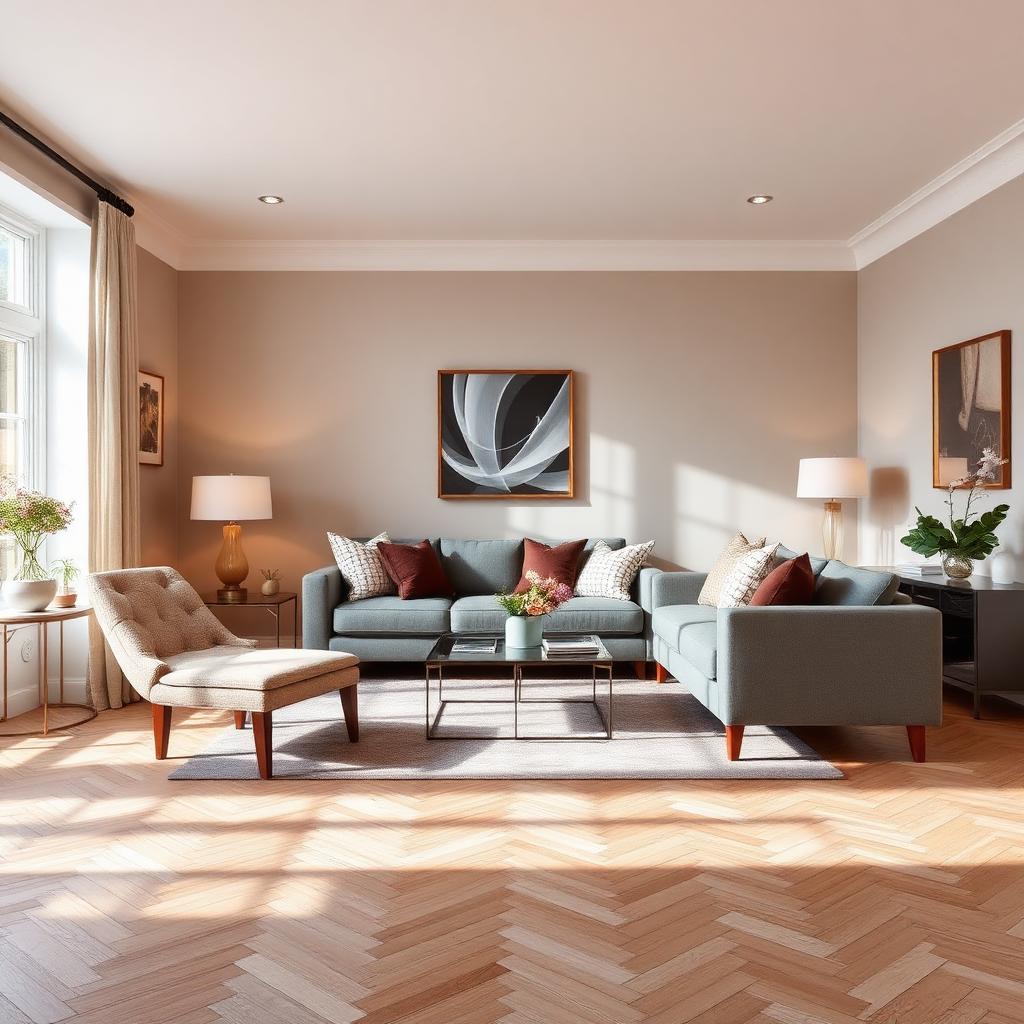
Engineered wood flooring
Engineered wood flooring supplied and fitted across Kent. Multi-ply stability, real wood wear layers, glue-down or floating fit, free measuring.
Engineered wood is a real wood veneer, the wear layer, bonded on top of several cross-grain plywood or HDF layers underneath. That cross-ply construction is the entire point. Solid wood expands and contracts along its width as humidity changes through the year, which is why it needs perimeter gaps and careful siting. Engineered board fights that movement layer against layer, so the finished floor stays flatter and wider boards become usable without the cupping risk solid timber carries in the same room.
We fit it across Kent as a straight swap for solid wood in rooms where underfloor heating, wide boards or ground floor slabs rule solid timber out, and as an upgrade from laminate where a customer wants a floor that can be sanded and refinished rather than replaced. The wear layer thickness on the board you choose decides how many times that refinishing is possible, so it is worth checking before you buy on looks alone.
It is not a floor you can treat like a sealed surface. Wood, even engineered wood, keeps working with moisture in the air and moves through the heating season. Acclimatisation before fitting, the subfloor's moisture reading, and how you run the central heating afterwards all decide whether the boards sit flat for years or start gapping and cupping within a winter. We talk customers through this at the survey rather than after the fit.
What the multi-ply construction actually buys you
A typical board is a real wood lamella, the top wear layer, bonded to a core of several plies laid at right angles to each other, usually finishing on a stabilising backing veneer. Each layer wants to move in a different direction as moisture changes, and together they cancel most of that movement out. This is why engineered boards can be supplied at 190mm, 220mm or wider without the cupping that the same width in solid oak would risk over a slab.
The core material varies by manufacturer, from birch plywood to HDF, and it changes how the board handles fixings, sanding and click joints. Plywood cores generally take screws and staples better for glue-assist fitting; HDF cores are common in click systems aimed at floating fits. Neither is wrong, but they are not interchangeable in a spec, and we match the core to the fitting method before ordering, not after.
- Cross-ply or HDF core resists the width-wise movement solid wood cannot avoid
- Wider boards, 190mm and up, become realistic without cupping risk
- Real wood top layer means the floor can still be sanded and refinished
- Different cores suit different fitting methods; not a free choice at spec stage
Wear layer thickness and how many times it can be sanded
The wear layer, the solid wood veneer on top, is usually somewhere between 0.6mm and 6mm depending on the product. A 6mm wear layer over an engineered board effectively behaves like a solid floor for sanding purposes and can typically take two or three light sands over its life. A 2mm to 3mm layer takes one careful sand, if that, once finish and any factory bevels are allowed for. Anything under 1mm to 1.5mm is not designed to be sanded at all and is a wear-and-replace product.
This is the single biggest factor in whether an engineered floor is a twenty-year investment or a ten-year one, and it is rarely printed clearly on the sample board in a showroom. We check it against the manufacturer's technical sheet before quoting, because a thin wear layer priced attractively per square metre can end up costing more over the life of the floor than a thicker one bought first time.
Acclimatisation and relative humidity before the boards go down
Engineered boards are more forgiving than solid wood but they are not immune to moisture. They need to sit in the room they will be fitted in, out of the packaging on stickers, for the period the manufacturer specifies, usually 48 to 72 hours, so the wood equalises with the room's temperature and relative humidity before fixing. Fitting straight from a cold van into a warm underfloor-heated room is one of the most common causes of early gapping we see called back to.
We take a moisture reading from the subfloor and a relative humidity reading from the room at survey and again on the day of the fit. A screed that reads damp, or a room running at very low humidity because the heating has been left on high through a viewing period, both change how the boards should be handled and how much expansion gap they need at the perimeter.
- Boards acclimatise in situ before fixing, not in a van or a garage
- Subfloor moisture content checked with a meter, not by eye
- Room relative humidity recorded before and on the day of fitting
- Expansion gaps sized to the board width and the room's humidity range
Cupping and gapping through the heating season
Gapping in winter and tightening or cupping in summer is normal to a small degree on any real wood floor, engineered included, and is not usually a defect. It becomes a problem when the movement is uneven, boards lift at the edges, cup with a visible dip through the middle, or gaps open wide enough to trap grit and catch a sock. That pattern usually points to a moisture imbalance rather than a fitting fault, either from the subfloor below or humidity swings above.
The heating season is when it shows. Central heating dries the air, timber releases moisture and boards can shrink and gap; a wet mopped floor or a badly ventilated room reverses that and boards can cup as the underside gains moisture faster than the top. Running the heating gradually rather than switching it hard on in October, and keeping a consistent humidity where practical, reduces both.
| What you see | Likely cause | What we check |
|---|---|---|
| Gaps opening in winter, closing in spring | Normal seasonal movement | Gap width against board width and season |
| Board edges lifted, dip in the centre | Moisture gain from below | Subfloor moisture reading, DPM condition |
| Gapping that never closes in summer | Under-acclimatised at fit | Fitting records, room humidity history |
| Localised cupping near a door or kitchen | Repeated wet cleaning or spillage | Cleaning routine, mat placement |
Glue-down versus floating, and what underfloor heating changes
Glue-down bonds the board to the subfloor across its whole face, using a flexible wood flooring adhesive. It transfers heat from underfloor heating more evenly, reduces the hollow sound some floating floors have underfoot, and generally copes better with wider boards because the adhesive resists movement across the full width, not just at the joints. It is the method we default to over screeded UFH.
Floating floors click together over an underlay and are not fixed to the subfloor, which makes them faster to fit and easier to lift later, but they rely on the click joint alone to resist movement and can develop a hollow feel or joint separation sooner under heavy use. Over UFH, a floating floor needs an underlay rated for heat transfer or the system's efficiency drops and the boards sit further from the heat source than intended.
- Glue-down suits UFH, wide boards and rooms needing a solid underfoot feel
- Floating suits faster turnarounds and floors likely to be lifted again
- UFH underlay must be heat-rated, not a generic acoustic underlay
- Board width and core type both affect which method a manufacturer allows
Board width and stability in real rooms
Narrow engineered boards, 120mm to 150mm, are the most forgiving of an imperfect subfloor or a room with humidity swings, because each board has less width to move. Wide boards, 190mm upwards, look better in open-plan spaces and show fewer joints, but they demand a flatter subfloor, tighter acclimatisation and usually a thicker, more stable core to stay flat.
We size the expansion gap to the total run width of the room as well as the board width. A long run in a wide-open kitchen diner needs more allowance at the perimeter, and sometimes an expansion strip partway across a very large area, than the same board fitted in a small bedroom.
Lacquer versus oiled finishes and the maintenance each demands
Lacquered boards arrive with a sealed, wipe-clean surface that resists everyday spills well and needs little more than dry or slightly damp mopping. The finish wears from the top down and once it is scuffed through to bare wood in a doorway or under a chair, that patch cannot be spot repaired invisibly, the whole board or the whole floor needs recoating.
Oiled boards soak the finish into the wood rather than sitting a film on top, so scuffs and light wear can often be spot treated with a maintenance oil rather than a full recoat, and the floor can be refreshed room by room. The trade-off is more regular upkeep, an occasional maintenance oil application, and less tolerance of standing water than a lacquered surface.
- Lacquer: low daily maintenance, but recoating is an all-or-nothing job
- Oil: spot repairable, but needs periodic re-oiling to stay protected
- Neither finish tolerates standing water or wet mopping long term
- Recoating and re-oiling both need the floor free of rugs and furniture
Sanding, re-oiling and where the floor actually fails
Sanding removes a thin skim of the wear layer to lift scratches and staining, and it only works while wear layer remains to take it. Oiled floors are usually easier to bring back without a full sand, an abrasive screen and fresh oil can restore a lot of the surface, but neither route fixes damage that has gone through to the ply beneath, which shows as a lighter or different-coloured patch that no amount of oil will match.
The failures we get called to are consistent: boards fitted too close to a radiator pipe or a bay window where sun and heat swing the local humidity more than the rest of the room, skirting or door linings fitted without an expansion gap so the floor has nowhere to move, and floors that have been wet mopped or had a steam mop run over them, which drives moisture into joints far faster than normal foot traffic and daily life ever would.
| Location or habit | Failure seen | Fix at spec or fitting stage |
|---|---|---|
| Board tight against a radiator pipe | Localised cupping or splitting | Pipe collar with clearance, not a tight cut |
| Bay window with strong sun exposure | Colour fade line, edge lifting | UV-stable finish, blind or film advice |
| Skirting fixed without expansion gap | Buckling along the wall run | Gap left and covered by beading, not skirting |
| Wet mopping or steam cleaning | Cupping, joint swelling | Damp mop only, correct pH-neutral cleaner |
Frequently asked questions
- How is engineered wood different from solid wood day to day?
- Engineered wood behaves more predictably through the seasons because its cross-ply core resists the width-wise movement solid timber shows. It can be fitted over underfloor heating and in wider boards more safely, though the amount of sanding it can take over its life depends entirely on the wear layer thickness.
- Can engineered wood go over underfloor heating?
- Yes, provided the manufacturer approves it for UFH, the wear layer and core suit heat exposure, and the fitting method, usually glue-down, transfers heat evenly. The heating needs to be run up and down gradually rather than switched hard, especially in the first season.
- How many times can an engineered floor be sanded?
- It depends on the wear layer thickness. A thick veneer, around 6mm, can typically take two or three light sands over its life. A thin wear layer under 2mm may only allow one careful sand, or none at all, so this is worth checking before buying.
- Why is my engineered floor gapping in winter?
- Central heating dries the air and the wood releases moisture, so boards shrink slightly and gaps open at the joints. This is normal seasonal movement within a certain range and usually closes back up as humidity rises again in spring.
- Should I choose lacquered or oiled boards?
- Lacquer gives a sealed, low-maintenance surface but needs a full recoat when it wears through. Oil soaks into the wood and can often be spot repaired room by room, at the cost of more regular maintenance oil applications to keep it protected.
- Is glue-down or floating better for engineered wood?
- Glue-down suits wider boards, underfloor heating and a solid underfoot feel because the adhesive resists movement across the whole board. Floating is quicker to fit and easier to lift later, but relies on the click joint alone to control movement.
- Why has my floor cupped near a radiator or bay window?
- Both spots create local humidity swings that the rest of the room does not see, heat drying the air near a radiator or sun warming boards in a bay. Boards there need clearance and correct siting at spec stage rather than a tight fit.
- Can I wet mop an engineered wood floor?
- No, standing water and wet or steam mopping drive moisture into the joints faster than normal use and are a common cause of cupping and swelling. A damp mop with a pH-neutral wood floor cleaner is the safer routine for both lacquered and oiled finishes.
Where to go next
Supplied and fitted across Gillingham and the ME7 area.
Supplied and fitted across Chatham and the ME4 area.
Supplied and fitted across Rochester and the ME1 area.
Supplied and fitted across Strood and the ME2 area.
Supplied and fitted across Rainham and the ME8 area.
Supplied and fitted across Maidstone and the ME14 area.
Supplied and fitted across Sittingbourne and the ME10 area.
Supplied and fitted across Faversham and the ME13 area.
Single species boards, timber right through, secret nailed or fully bonded, sanded and refinished for decades rather than replaced.
An HDF-cored floating floor with a printed decor layer under a hard AC-rated wear surface, usually the least expensive of the hard floors.
Rigid, layered vinyl planks and tiles built around a wear layer and a printed decorative film, fitted glued or clicked over a properly prepared subfloor.
Why engineered wood floors cup, crown or gap, and the humidity and subfloor fixes that resolve it.
Laminate looks like wood but isn't — compare it against real engineered wood on feel, longevity and value.
Choosing between LVT and engineered wood? Compare looks, water tolerance, refinishing and lifespan before you buy.
Which flooring types work well over underfloor heating, thermal considerations, and how commissioning affects fitting timescales.
Free measure, free written quote
Book a free measure and we will confirm board thickness, fixing method and moisture readings before quoting engineered wood in writing.
Showroom and warehouse: Unit 9, Matilda Close, Gillingham Business Park, Gillingham, Kent, ME8 0PY