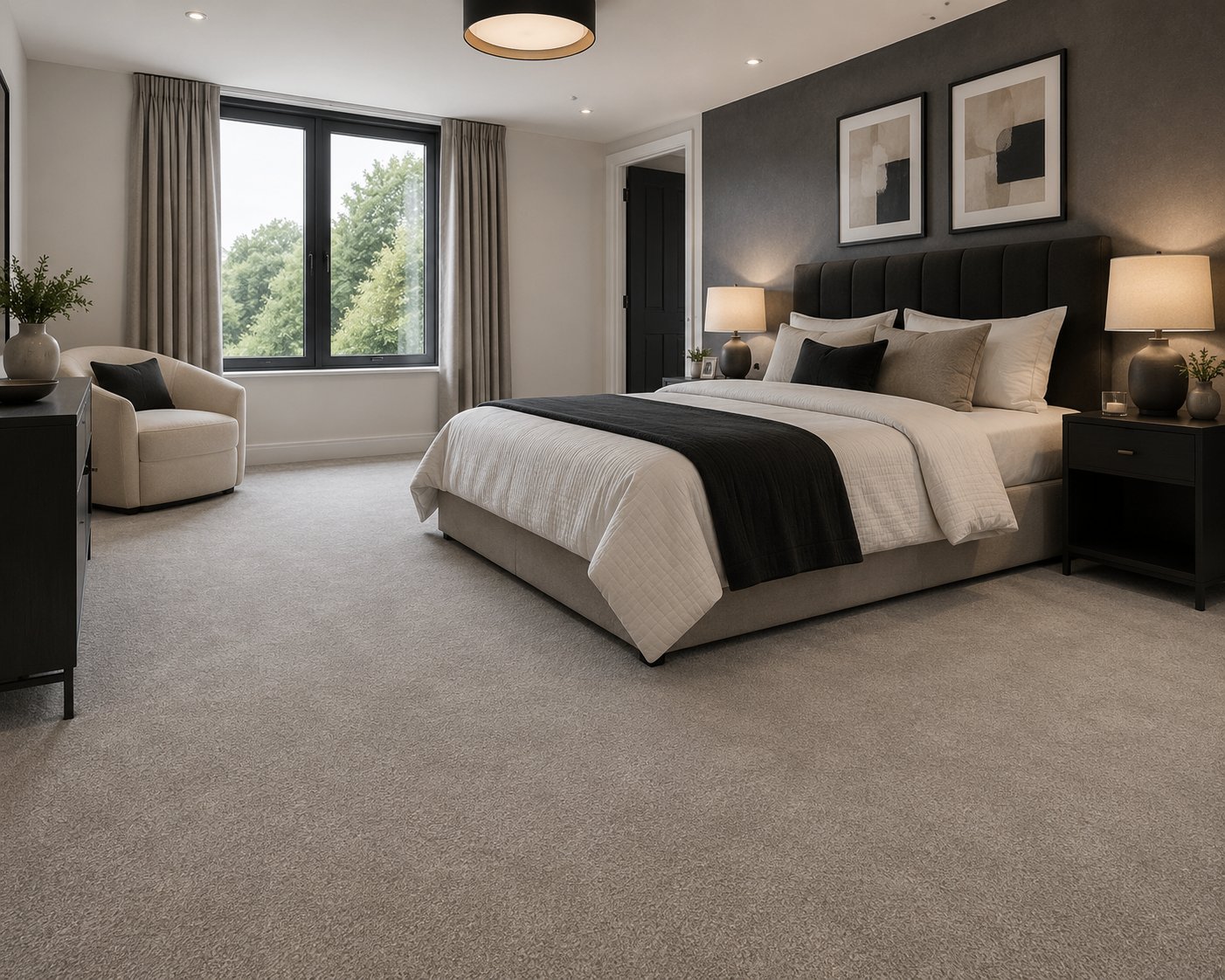
Cheap Carpets in Kent
Genuinely inexpensive carpet done properly. What changes the price, where budget carpet works, and how to compare quotes like for like.
Cheap carpet has a poor reputation it does not always deserve. Some of it is thin, sheds badly and flattens within a year. Some of it is a perfectly sound polypropylene twist that will do a hallway or a rental bedroom for years without complaint. The difference is not the price tag, it is what sits behind it: the fibre used, how much of it there is per square metre, and how it is backed and finished.
Buyers get caught out when they compare two rolls purely on the number on the swing ticket. A carpet priced lower per metre can still be the better buy if it carries more pile weight or a denser twist, because it will wear more slowly and look tidier for longer. Equally, a carpet priced higher is not automatically superior if the saving is coming from a thinner backing or a cheaper latex.
This page sets out what actually moves the price of a carpet, where a genuinely budget choice is the right call, and where it will cost more in the long run than paying a little extra now. We also explain what a free measure and a written quote from us should include, so you know exactly what you are comparing before you commit.
What actually makes one carpet cost less than another
Fibre is the biggest factor. Polypropylene and polyester fibres cost less to produce than wool or wool blends, and they behave differently underfoot and over time. Neither is automatically wrong, they suit different rooms and different budgets.
After fibre, pile weight and density decide how a carpet performs. Two rolls of the same fibre can be priced apart because one simply has more yarn packed into every square metre, which is the main reason one flattens faster than the other.
- Fibre type: polypropylene, polyester, nylon or wool blend
- Pile weight, given in grams per square metre
- Twist level and density of the pile
- Backing type: action back, latex or woven hessian
- Roll width, which affects how much waste a room produces
False economies to watch for
The classic false economy is buying the cheapest carpet in a heavy-traffic area such as a hallway, stairs or a living room used daily by a family. A light-duty carpet in a high-wear spot will show pile crush and shading within months, and refitting it sooner cancels out the saving.
Underlay is the other place people cut too far. A thin, low-density underlay under a budget carpet compounds the wear problem, because the carpet gets no support and flattens faster than it would over a proper foam or crumb rubber underlay.
- Fitting the lightest-duty carpet on stairs or a main hallway
- Skipping underlay or using an unsuitable thin pad to save money
- Ignoring roll width and ending up with avoidable seams and offcuts
- Buying a low-durability weave for a room with pets or children
Where a budget carpet is the right call
Spare rooms, low-traffic bedrooms, box rooms and rarely used areas are sensible places for a genuinely inexpensive carpet. Wear here is light, so a lower pile weight polypropylene twist will look fine for years.
Budget carpet also makes sense where a property is being prepared for sale or where flooring is a short-term measure ahead of a bigger renovation. In these cases spending more is money the room will not repay.
Where it is not the right call
Stairs take concentrated point pressure on the nosing of each tread, so a light carpet wears through there quickly regardless of how well it is fitted. This is one area worth a heavier pile weight even on a tight budget.
Main living rooms and hallways used daily by the whole household are the other exception. These are the rooms visitors see first and the rooms that carry the most footfall, so a slightly heavier carpet earns its keep.
How to compare quotes like for like
The only fair comparison is fibre against fibre and weight against weight, not headline price against headline price. Ask for the pile weight and fibre type on any carpet you are quoted, and check whether the quote is supply-only or supply and fit.
Also check whether underlay, gripper, door bars and waste disposal are included in the figure you have been given, since these vary between quotes and materially change what you are actually paying for.
| Item | Why it matters | Ask for |
|---|---|---|
| Fibre and pile weight | Drives durability and appearance retention | Written spec, not just a sample name |
| Underlay included | Affects comfort and carpet lifespan | Confirmation in writing |
| Fitting included | Supply-only differs from supply and fit | Clear breakdown on the quote |
| Waste and gripper | Small items that can be left off a quote | Confirmation they are included |
What our free measure and written quote covers
We measure the room properly on site, noting doorways, alcoves and any awkward shapes that affect how the roll is cut and how much waste results. This is what allows a written quote to be accurate rather than a rough estimate.
The written quote itemises the carpet, underlay, gripper and fitting so you can see exactly what makes up the total, and so you can compare it fairly against any other quote you have obtained elsewhere.
Getting a sensible budget carpet fitted properly
Even a genuinely inexpensive carpet benefits from correct fitting: gripper set at the right distance from the wall, seams placed away from high-wear paths, and stretching done to the proper tension. Poor fitting undermines a good carpet just as much as a poor carpet undermines good fitting.
Our employed fitters work to the same standard regardless of the price point of the carpet, which is one reason a budget choice from us still holds up better than the same product fitted casually elsewhere.
Frequently asked questions
- Is cheap carpet always poor quality?
- No. A lower price often reflects fibre choice such as polypropylene rather than wool, not poor manufacturing. Check pile weight and backing rather than judging on price alone, and it can perform perfectly well in the right room.
- What is the biggest factor in carpet price?
- Fibre type is usually the largest factor, followed by pile weight and density. Two carpets of the same fibre can still be priced apart because one carries more yarn per square metre than the other.
- Should I skip underlay to save money?
- We would not recommend it. Underlay protects the carpet from below and extends its life considerably, so skipping it tends to cost more overall through earlier replacement.
- Is budget carpet suitable for stairs?
- It can be, but stairs take concentrated wear on the nosing of each tread, so a heavier pile weight than you might use in a spare room is worth the small extra outlay.
- What should a written quote include?
- It should itemise the carpet, underlay, gripper, fitting and any waste disposal separately, so you can see what makes up the total and compare it fairly against other quotes.
- Is a free measure really free?
- Yes. We measure the room and provide a written quote at no cost and with no obligation to proceed.
- Can I fit a budget carpet myself to save more?
- You can, but incorrect stretching or gripper placement will shorten the life of any carpet, including a budget one, which reduces the saving fitting yourself was meant to achieve.
- Where should I never go for the cheapest option?
- Avoid the lightest-duty carpet on stairs or in a main living room and hallway used daily, since these areas wear fastest and a slightly heavier pile pays for itself.
Where to go next
Browse the full carpet range by fibre and use.
See the underlay options that pair with budget carpet.
Short lengths of carpet for small rooms at a lower cost.
How flooring is priced and measured across the range.
Our employed fitting teams covering Kent.
A plain-English breakdown of what goes into a per-m² flooring price, with guide-only UK cost bands for materials, fitting and extras.
Wool or polypropylene carpet — compare feel, stain resistance, price and durability before you choose.
The real cost differences between buying flooring supply-only and using supply-and-fit, including risks, warranties and guide-only price bands.
See what makes up the cost of carpet fitting in the UK, from carpet and underlay to gripper rods, door bars and stair costs — guide-only ranges.
Free measure, free written quote
Book a free measure and written quote to see exactly what a genuinely inexpensive carpet would cost fitted properly in your home.
Showroom and warehouse: Unit 9, Matilda Close, Gillingham Business Park, Gillingham, Kent, ME8 0PY