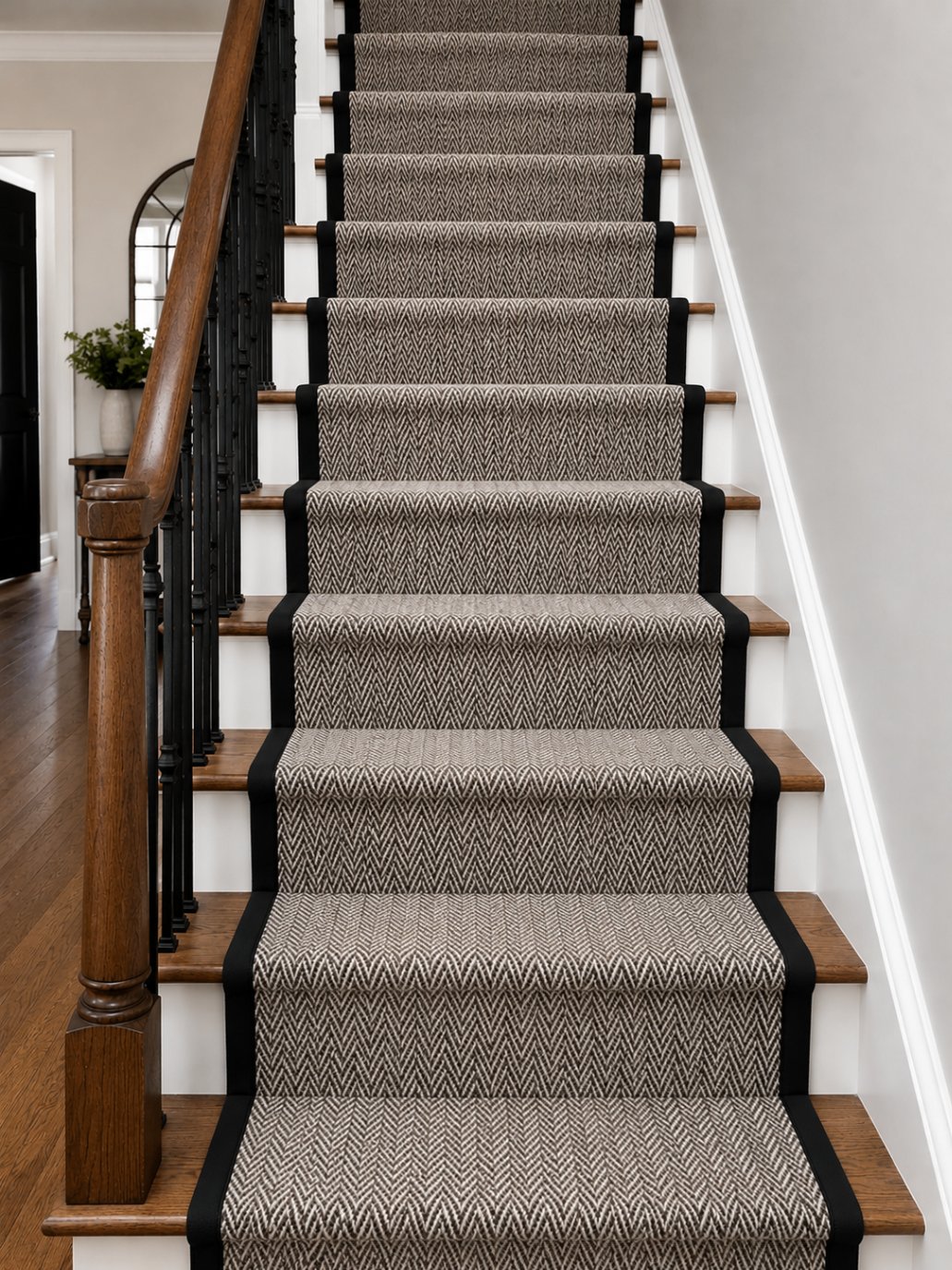
Stair Runner Installation: What Happens, Step by Step
How a stair runner is installed, from measuring and choosing fixings to fitting each tread, plus how to prepare the staircase and how long the job normally takes.
A stair runner is installed by marking a centre line down the staircase, fixing gripper and underlay to each tread, then laying the runner from the bottom step up so it sits straight with an even border of timber either side. Most straight staircases are done within a day, and the woodwork should be painted or varnished before fitting, not after.
Because a runner leaves the edges of every step on show, it is less forgiving than wall-to-wall stair carpet. A few millimetres of drift at the bottom becomes obvious by the landing, which is why the measuring and setting out matter more than the laying itself.
Before the fitter arrives
Loose or squeaking treads are best sorted before the runner goes down. Once gripper and underlay are fixed, getting to the timber underneath means lifting the runner again.
- Finish any painting or varnishing of the treads and risers and let it fully harden
- Decide on stair rods or a plain finish so fixings can be planned
- Clear the stairs and landing, and remove any old carpet if you are doing it yourself
- Tell us about loose treads or creaks so they can be fixed first
Measuring and setting out the runner
Each tread and riser is measured, including the nosing, and the width of the runner is chosen so the timber border looks balanced on your staircase. On older houses the steps are rarely all the same size, so the fitter works to the staircase as it is rather than to a single figure.
A centre line is marked on every step. That line, not the edge of the wall or the banister, is what keeps the runner straight all the way up.
How the runner is fixed to each step
Gripper is fixed at the back of each tread and base of each riser, and a stair-rated underlay is cut to sit neatly inside the runner's width so it does not show at the sides. The runner is then stretched over each nosing and pushed into the gripper so it stays tight under foot.
Stair rods, where chosen, are fitted last. They are mostly decorative on a modern fitting, since the gripper holds the runner, but they need to be lined up carefully so they sit level on every step.
Winders, landings and turns
Winders, where the stairs turn a corner, are the slowest part of the job. The runner has to be folded or cut and joined on each fan-shaped step while keeping the border even, so a staircase with a turn takes longer than a straight flight.
If the runner continues across a landing, it is usually planned as one piece with the stairs so the pattern and pile direction carry through. Our stair runner or fully carpeted stairs guide compares the two looks if you are still deciding.
After fitting
The stairs can be used as soon as the fitter has finished. Vacuum the runner regularly, paying attention to the nosings where wear shows first, and wipe the exposed timber rather than letting grit build up at the edges.
Frequently asked questions
- How long does it take to fit a stair runner?
- A straight staircase is normally finished within a day. Winders, landings and period stairs with uneven steps add time.
- Should I paint the stairs before the runner goes on?
- Yes. Paint or varnish the treads and risers first and let the finish harden, so the fitter is not working on soft paint and you do not have to cut in around the runner.
- Do I need stair rods?
- No. Gripper holds the runner in place, so rods are a style choice. If you want them, tell us before fitting so the fixings can be planned.
- Does a stair runner need underlay?
- Yes. A stair-rated underlay cut to the runner's width protects the pile at the nosings and makes the stairs quieter and more comfortable.
Keep reading
A runner or full stair carpet? Compare looks, cost and maintenance for your staircase before choosing.
Why stair nosings wear through and carpet comes loose on stairs, and how to fix both safely.
A realistic timeline of what to expect on the day your new flooring is fitted, and how to prepare your home beforehand.
See how we survey, prepare and fit stair runners across Kent.
See how we survey, prepare and fit carpet across Kent.
Talk it through with a fitter, not a call centre
Send us a photo of your staircase or book a free measure, and we will talk you through runner widths, fixings and a written quote.