Carpet tiles in Canterbury
Office carpet tiles for Canterbury
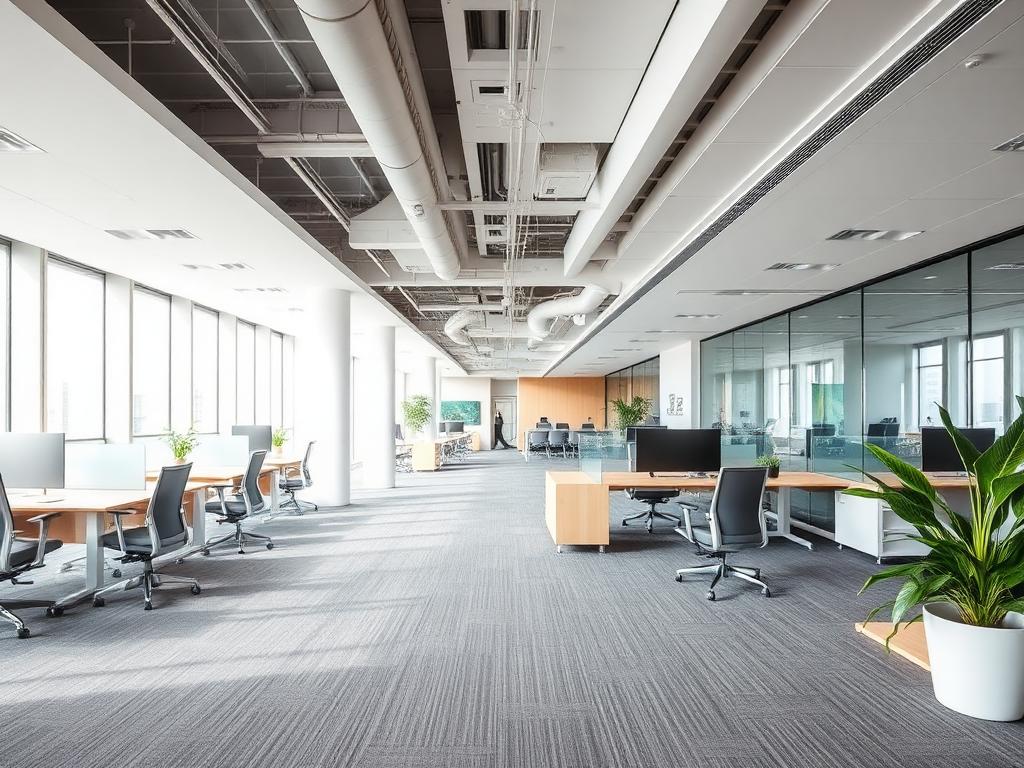
Commercial carpet tiles for Canterbury offices and workplaces near A28. Monolithic, quarter turn and ashlar laying available.
Canterbury has a mix of older converted offices and newer builds around Canterbury Retail Park, and both throw up different carpet tile challenges. Older conversions near A28 often sit on suspended timber floors that need checking for movement before tiles go down, while newer units tend to have raised access flooring built in from the start, which suits carpet tiles well because tiles lift cleanly for cable runs without disturbing the tackifier bond elsewhere on the floor.
Castor chair wear shows up earlier in busy desk based offices around Canterbury Retail Park, Canterbury than in meeting rooms or reception areas nearby, which is why a mixed pile specification across one floor plate is common in Listed period homes buildings with varied room use.
Phased fitting suits the working pattern of most Canterbury offices near Thanington, letting a business in Canterbury Retail Park keep functioning while sections of carpet tile are lifted and relaid zone by zone rather than in one closure.


Ask about carpet tiles in Canterbury
Suspended timber and raised access floors around Canterbury
Older commercial buildings near Thanington, Canterbury often sit on suspended timber floors, which need checking for deflection and squeak before carpet tiles go down, since a bouncy subfloor will eventually work tackifier loose at the tile edges. Newer builds around Canterbury Retail Park more commonly use raised access flooring, which is generally more stable and better suited to frequent tile lifting for cabling.
Either way, the subfloor gets assessed at survey before we recommend bitumen or PVC backed tiles, because the two backings respond differently to a subfloor that moves slightly underfoot.
Dye lot and attic stock records kept for Canterbury floors
Every carpet tile floor we fit in Canterbury City Council has its dye lot batch number recorded at handover, along with the laying pattern used, whether monolithic, quarter turn, ashlar or brick. That record is what makes attic stock useful years later rather than just spare tiles sitting in a cupboard.
Businesses around Canterbury Retail Park that keep this paperwork find repairs far quicker when a tile is damaged, since our fitters can confirm the batch match before turning up rather than guessing on site.
- Batch number recorded at install for every Canterbury carpet tile floor
- Laying pattern documented so replacement tiles go back correctly oriented
- Attic stock quantity agreed with the client before the job finishes
Phased fitting for occupied offices near Canterbury Retail Park
Most commercial carpet tile jobs around Canterbury happen while the business keeps working, so fitting is broken into phases, clearing and refitting one zone near A28 at a time. This suits offices in Canterbury City Council that cannot afford a full closure, and it works well with the tile format since grids carry through cleanly between phases.
Out of hours or weekend phases are common for busier Listed period homes buildings around Thanington, and furniture is moved and replaced by our own fitting team as part of the job.
Castor wear in Canterbury office floors
Office chairs on castors wear carpet tiles under desks faster than general footfall wears the rest of the floor, and this shows up quickly in busy Canterbury Retail Park offices around Canterbury. A denser tufted loop pile copes better than a softer cut pile in these zones.
For floors in Canterbury City Council with heavy desk based use, we can zone a more robust tile specifically under workstations while keeping a standard tile elsewhere in the same room.
What we check before quoting in Canterbury
- Plan the phasing sequence around desks and furniture with the client before work starts.
- Confirm door undercuts and threshold heights against the finished tile thickness.
- Note any fire rating or acoustic requirement that affects underlay or backing choice.
- Check skirting and edge trim condition where the new tile grid meets the wall line.
- Confirm whether the subfloor is solid concrete, suspended timber or a raised access floor before specifying the backing.
- Check for old adhesive residue from a previous floor covering that could affect tackifier bond.
How the carpet tiles job runs
- 1Tackifier application
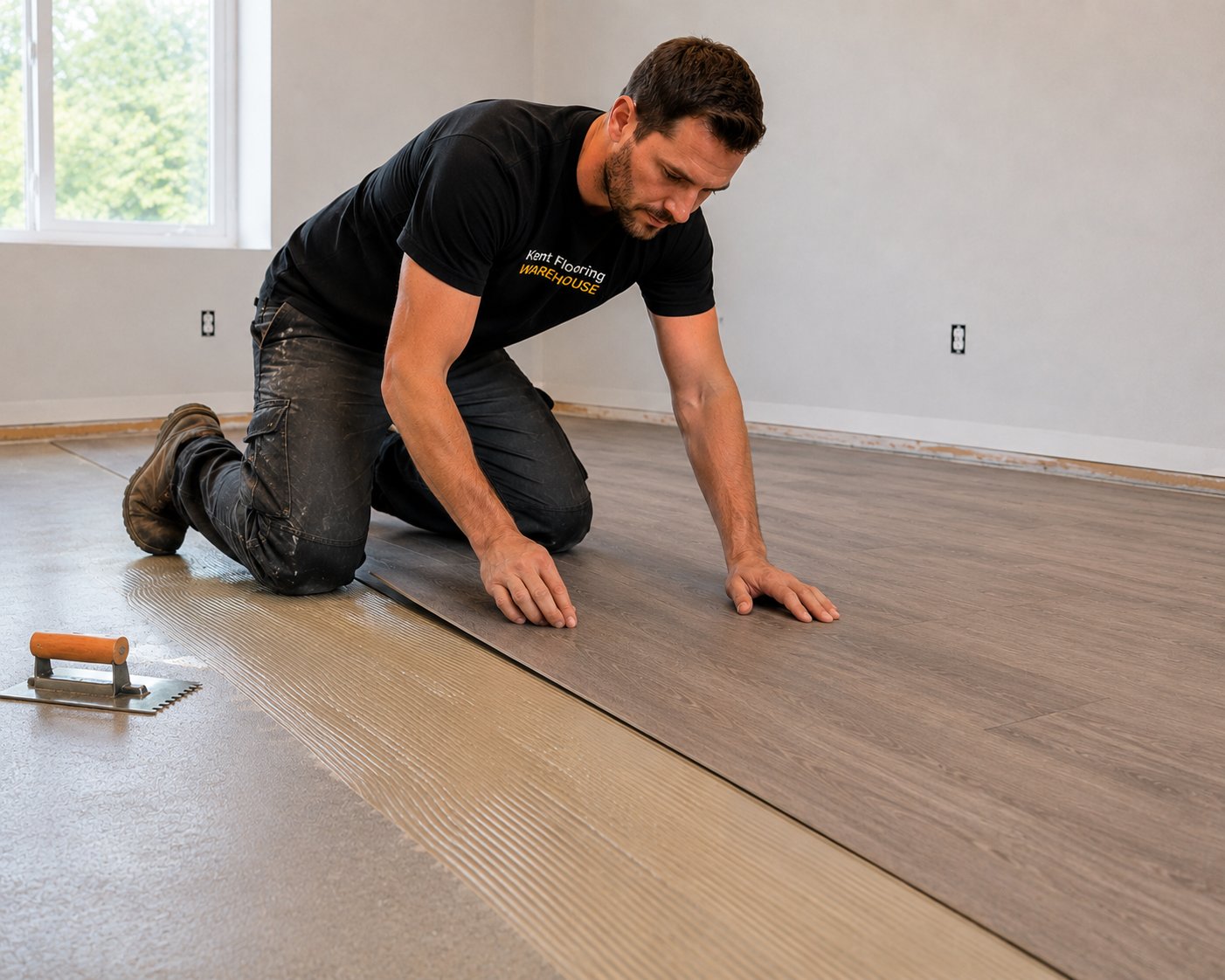
A pressure sensitive tackifier adhesive is spread thinly across the prepared subfloor and left to reach its correct tack before tiles are laid, giving a bond firm enough to prevent movement but loose enough for future lifting.
- 2Laying the tiles
Tiles are laid to the set out grid in the agreed pattern, working outward from the centre line, with dye lot batches kept together and cut tiles reserved for less visible edges near skirtings and thresholds.
- 3Phased zones around furniture
In occupied offices, sections are cleared, fitted and handed back zone by zone, with furniture moved and replaced by our fitters, so the grid carries through cleanly between phases without visible joins.
- 4Attic stock and handover
Spare tiles from the same dye lot are set aside, the batch number and laying pattern are recorded, and the client is shown how a single damaged tile can be lifted and replaced without disturbing the rest of the floor.
- 5Survey and subfloor check
We assess whether the floor is solid concrete, suspended timber or raised access flooring, check for old adhesive residue or damp, and confirm which backing, bitumen or PVC, suits the building and how often it will need lifting for cabling.
Carpet tiles questions from Canterbury customers
- How much attic stock should a Canterbury office keep?
- Around 5 percent of the total tiles laid is a sensible guide for most Canterbury offices, stored flat and out of direct sunlight from the same dye lot recorded at install.
- Can carpet tiles cope with office chairs on castors in a Canterbury workplace?
- A dense tufted loop pile copes well with normal castor use, though wear concentrates under desks. We can specify a heavier tile just in those zones for busier Canterbury offices.
- Do you supply carpet tiles only, without fitting, for Canterbury businesses?
- Yes, we offer supply-only or supply-and-fit for Canterbury commercial jobs, though most clients use our own employed fitters for a modular floor like this to get the setting out and dye lot control right.
- What laying pattern do you recommend for a Canterbury office reception?
- Quarter turn is the most common choice for plain commercial tiles since it hides seams and wear paths well, though ashlar or brick patterns suit plank format tiles for a more contemporary reception look.
- How long does a phased carpet tile fit take in a Canterbury office?
- It depends on floor area and how many zones are needed, but phased fits in Canterbury are usually planned around normal working hours or evenings so timing is agreed with the client before work starts.
- Can a single stained carpet tile be replaced in a Canterbury meeting room?
- Yes, provided a matching tile from the same dye lot is available, either from attic stock or from stock we hold, it can be lifted and swapped without redoing the wider room.
Where we fit carpet tiles around Canterbury
We cover Thanington, Hales Place, Wincheap, Sturry, Blean and the wider CT1 area, reaching Canterbury via A2, A28, A290. Commercial work runs at city-centre lanes, Canterbury Retail Park, Whitstable Road business units.
Showroom and warehouse: Unit 9, Matilda Close, Gillingham Business Park, Gillingham, Kent, ME8 0PY
Every service we cover in Canterbury.
Warm underfoot, quiet in use, and available in twist, loop, saxony and Berber constructions to suit bedrooms, stairs and living rooms.
Slip-resistant sheet vinyl with an aggregate wear layer, welded seams and coved edges for kitchens, clinical rooms, schools and anywhere wet feet or spilled fat meet hard floor.
Wide rolled sheet with a cushioned or felt-back core, welded seams and no grout lines, laid as a single waterproof skin across kitchens, bathrooms and hallways.
Fitting out an office or commercial unit? Compare carpet tiles and broadloom carpet on cost, downtime and wear.
Contract-grade or domestic carpet — understand construction, durability and where each is actually needed.
What to think about when specifying flooring for an office refurbishment — footfall zoning, acoustics, cabling and phased fitting.
Booking carpet tiles in Canterbury
Dye lot control and attic stock are what make carpet tiles genuinely repairable, letting a single damaged tile be swapped in minutes rather than a room being re-carpeted, provided the batch and pattern are recorded properly.