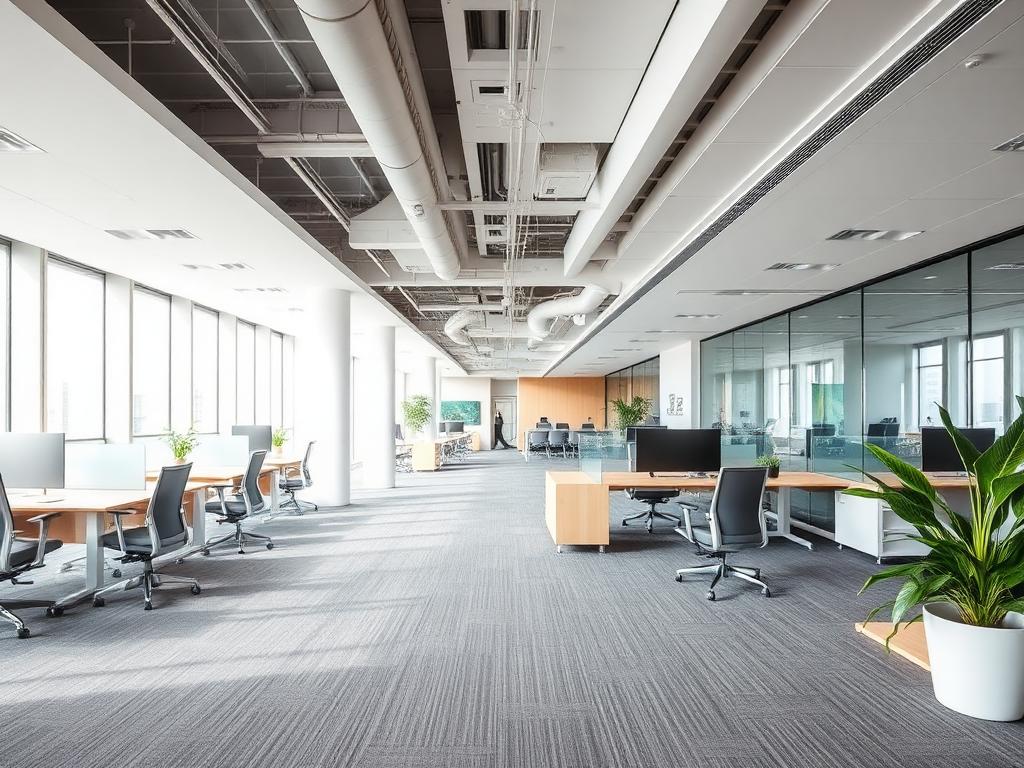
Working With Commercial Flooring Contractors: What to Expect
What a commercial flooring contractor does from survey to handover: paperwork, out of hours programmes, subfloor work and the questions worth asking first.
A commercial flooring contractor surveys the site, specifies a floor that suits the traffic and use, prepares the subfloor, installs to an agreed programme and hands over a finished, documented floor. The good ones plan around your business, so a shop keeps trading and an office keeps working while the floor goes down in phases or out of hours.
Hiring for a commercial job is different from buying a carpet for a lounge. There is paperwork, access, a programme, other trades on site and usually a hard deadline. This guide sets out what should happen at each stage so you can judge any contractor, including us, on how they handle it.
The survey sets the whole job
Before anyone prices a commercial floor, someone should walk it. A proper survey measures every area, notes doorways, ramps, stair edges and thresholds, and checks what is underneath: old adhesive, tiles, a cracked screed or a slab that may still hold moisture.
Our survey is free, and it is where we agree which rooms can be closed and when. If a contractor quotes a building from a floor plan alone, expect variations later, because the condition of the base is the part a drawing never shows.
Paperwork you should be offered
Commercial sites rightly ask for documents before work starts. We provide RAMS (risk assessments and method statements), CSCS card details for the fitting team and public liability documentation so your building manager or principal contractor can sign the job off.
Ask for these at quote stage rather than the week before. A contractor who is slow to produce them is often slow to produce everything else.
- RAMS covering access, dust, adhesives and waste
- Proof of public liability cover
- Fitter identification for site sign-in
- Product data sheets for the flooring, adhesive and any smoothing compound
Choosing the right commercial floor for the space
Most commercial projects mix floor types. Offices often pair contract carpet tiles in open areas with LVT in kitchens and breakout spaces. Shops lean on heavy commercial LVT for the sales floor and entrance matting at the door. Toilets, kitchens and clinical rooms usually need slip rated safety vinyl with welded seams.
Wear ratings matter here. Heavy commercial LVT is rated 33 or 34, which is the class built for busy public floors. A domestic grade product can look identical in a sample and wear through in a fraction of the time.
| Area | Typical choice | Why |
|---|---|---|
| Open plan office | Contract carpet tiles | Acoustic comfort and single tile replacement |
| Reception or shop floor | Heavy commercial LVT | Hard wearing and easy to clean |
| Kitchens and washrooms | Safety vinyl | Slip resistance and sealed seams |
| Entrances | Matting systems | Stops grit and water spreading inside |
Programmes, phasing and out of hours work
Most of our commercial installs are done in the evening, overnight or at weekends so trading is not disrupted, and the programme is agreed up front. Larger sites are split into zones, with furniture moved, the floor prepared and fitted, and the zone handed back before the next one starts.
Build in cure times. Smoothing compound and adhesive need time before traffic, and a good contractor will tell you honestly when a zone can be walked on and when heavy furniture can go back.
Subfloor preparation is where commercial floors succeed or fail
Commercial floors carry more traffic, trolleys and chairs than any home, so every flaw in the base shows. We test moisture, remove old coverings and adhesive, and use latex smoothing compound or plywood overlay to give a flat, sound surface before anything is laid.
If a quote looks low, check whether preparation is included. It is the line most often left off and the most common reason a finished floor bubbles, gaps or lifts.
Questions to ask any contractor before you sign
- Who will fit the floor, and are they employed by you or subcontracted?
- What preparation is included, and what happens if the survey finds more?
- Can you work to our hours and in phases?
- Which products are specified, and what are their wear and slip ratings?
- What paperwork will you provide before starting?
Frequently asked questions
- Do commercial flooring contractors work out of hours?
- Many do. Most of our commercial installs are completed in the evening, overnight or at weekends, with the programme agreed before work starts.
- What documents should a commercial flooring contractor provide?
- Expect RAMS, public liability documentation and fitter details such as CSCS cards, plus product data sheets if your building manager asks for them.
- Can you floor an occupied office or shop?
- Yes. We split the site into zones, move furniture, prepare and fit each zone, then hand it back before moving on, so the business keeps running.
- Is subfloor preparation included in a commercial quote?
- It should be listed clearly. We survey first and include the preparation the floor needs in the written quote, so there are no surprises on site.
- Which floor is best for a busy commercial area?
- It depends on use. Heavy commercial LVT rated 33 or 34 suits busy public floors, carpet tiles suit offices, and safety vinyl suits wet or food areas.
Keep reading
How commercial flooring projects are costed — area, product spec, subfloor, phasing and out-of-hours work — with guide-only UK price bands.
What to think about when specifying flooring for an office refurbishment — footfall zoning, acoustics, cabling and phased fitting.
Commercial vinyl flooring explained: sheet, safety vinyl and LVT for workplaces, what each suits, how it is laid and why the subfloor decides how well it performs.
See how we survey, prepare and fit commercial flooring across Kent.
Talk it through with a fitter, not a call centre
Tell us about the site and your deadline, and we will arrange a free survey and a written commercial quote.