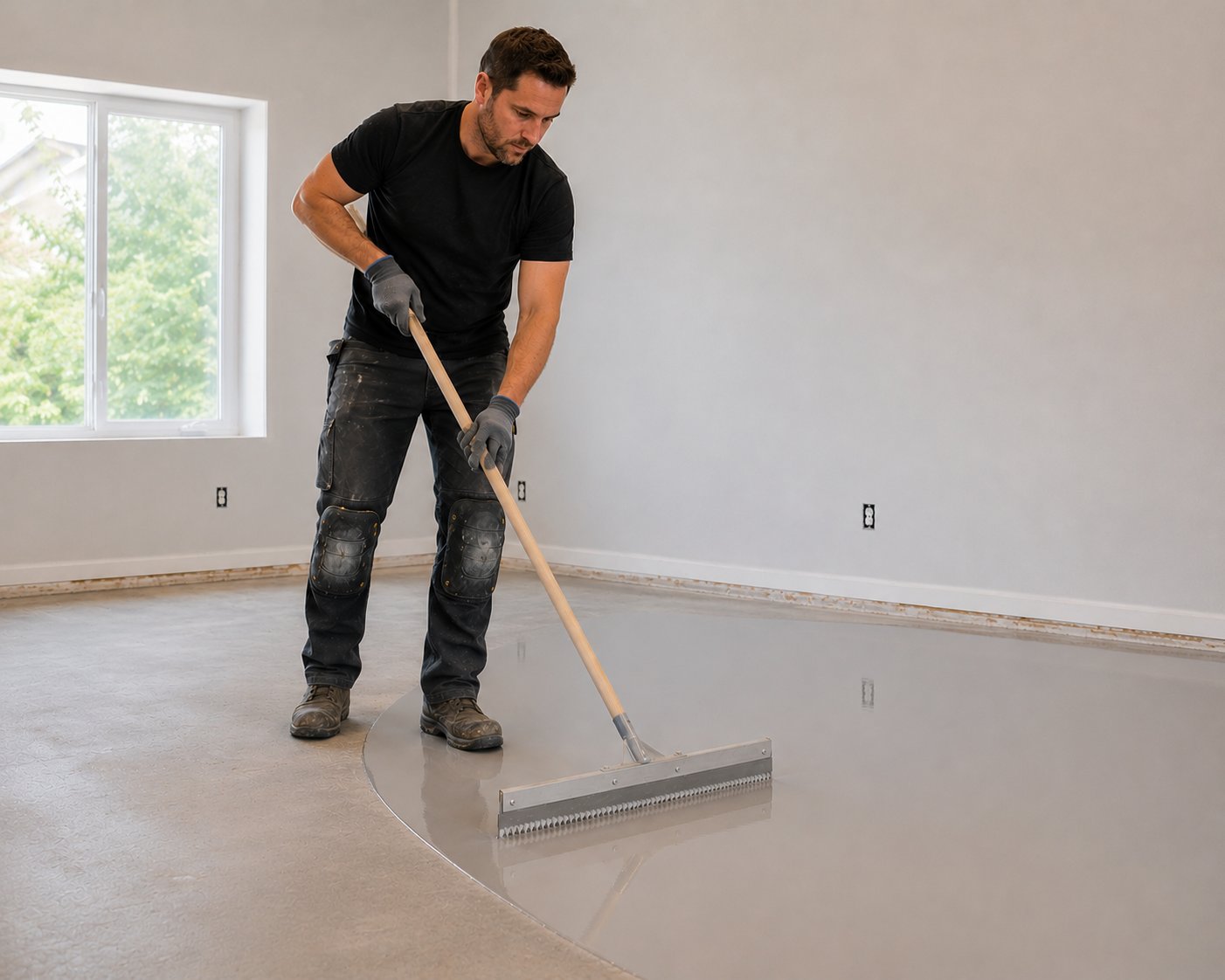
How Much Does Subfloor Preparation Cost?
What subfloor preparation involves and what it typically costs — levelling compound, damp treatment, plywood overlay — guide-only UK ranges.
Subfloor preparation is one of the most common reasons a flooring quote changes between an initial estimate and the final written price. It's rarely optional — most flooring types perform poorly, or fail early, when laid over an uneven, damp or unstable subfloor — but the scope and cost vary a lot depending on what's actually underneath your existing floor.
This guide covers the main types of subfloor prep, roughly what they cost, and why it's worth having this checked before committing to a flooring choice.
Subfloor prep is also one of the areas where a low headline quote can hide a problem: if a competing quote looks unusually cheap, it's worth checking whether it has actually allowed for any prep at all, or whether it's assuming a perfect subfloor that may not exist once the old flooring comes up.
The main types of subfloor preparation
- Self-levelling compound — smooths out dips and unevenness in concrete or screed floors
- Damp-proof membrane — manages residual moisture in solid floors before sensitive flooring is laid
- Plywood overlay — flattens and stiffens uneven or springy timber subfloors
- Screed repair — patches or rebuilds damaged sections of a solid floor
- Old adhesive/flooring removal — strips residue that would otherwise show through or affect bonding
Guide-only cost bands
| Subfloor work | Guide price range |
|---|---|
| Self-levelling compound | £15–£30 per m² |
| Damp-proof membrane | £10–£20 per m² |
| Plywood overlay | £15–£25 per m² |
| Old adhesive/flooring removal | £5–£15 per m² |
| Localised screed repair | £150–£400 per affected area |
Why it's not something to skip
Laying new flooring over an unprepared subfloor risks premature wear, visible imperfections telegraphing through thinner products like LVT and vinyl, and in the case of damp, potential failure of adhesives or subfloor damage over time. Prep costs money upfront but generally protects the life of the new floor.
How subfloor issues are usually discovered
Some problems are visible before work starts, but many — particularly damp, hidden unevenness, or old adhesive residue — only become clear once existing flooring is lifted. This is the most common reason a final quote differs from an initial estimate, and a good fitter will flag the possibility upfront.
What a survey should tell you before work starts
- Whether the subfloor is timber or solid concrete/screed
- Moisture readings, particularly on ground-floor solid floors
- Any visible unevenness, cracking or previous repairs
- What's currently bonded to the subfloor and how it will need to be removed
Timber versus solid subfloors: different problems, different costs
Timber subfloors tend to suffer from movement, springiness or unevenness between joists, usually addressed with a plywood overlay screwed down across the whole area. Solid concrete or screed subfloors are more prone to moisture and surface unevenness, addressed with damp-proof membranes and self-levelling compound. Because the fixes differ, the cost of prep for what looks like a similar problem can vary depending on what's underneath.
Drying times and how they affect your fitting date
Self-levelling compound and damp-proof membranes both need time to cure before flooring can go down on top, typically at least 24 hours for compound and longer for a full DPM system depending on the product. This means a subfloor with significant issues can add a day or more to the overall project timeline, not just to the invoice.
Frequently asked questions
- Can I skip subfloor prep to save money?
- It's generally not advisable, since most flooring warranties assume a properly prepared subfloor, and skipping prep risks early failure, visible imperfections or adhesive problems. Any recommended prep should be explained clearly as part of your written quote.
- How do I know if my subfloor has a damp problem?
- Signs include a musty smell, cold or clammy patches, or previous flooring lifting and staining, but a proper moisture reading with a meter during survey is the only reliable way to confirm it. This is a standard part of assessing a solid ground-floor subfloor.
- Does every room need self-levelling compound?
- No — it's only needed where there's genuine unevenness beyond the tolerance of your chosen flooring, which varies by product. A survey identifies which rooms actually need it rather than applying it as a blanket cost.
- Will subfloor prep costs be confirmed before work starts?
- Where issues are visible at survey, yes, they'll be included in your written quote; where they only become apparent once old flooring is lifted, a reputable fitter will discuss and agree any additional cost with you before proceeding.
Keep reading
The genuine reasons a flooring quote can move after a site survey — subfloor condition, access, room shape — and how to avoid nasty surprises.
What drives the price of LVT flooring — click vs glue-down, tile thickness, subfloor prep and fitting labour — with guide-only UK cost ranges.
A plain-English breakdown of what goes into a per-m² flooring price, with guide-only UK cost bands for materials, fitting and extras.
See how we survey, prepare and fit LVT across Kent.
See how we survey, prepare and fit commercial flooring across Kent.
Talk it through with a fitter, not a call centre
Request a measured written quote from Kent Flooring Warehouse after a free, no-obligation site survey — call 07702 737267 to book a visit from our Gillingham-based team of in-house fitters.