Can you lay LVT over tiles, or laminate over tiles?
Can you lay LVT over tiles? When tiles can stay under LVT or laminate, the checks needed, preparation options and when the tiles should come up.
Can you lay LVT over tiles? Often, yes, but only when the tiles are firmly bonded, flat and free of moisture problems, and the right preparation is used for the product. Laminate over tiles is usually simpler because it floats on an underlay, while thin glue-down LVT needs a much smoother surface. Leaving the tiles in place can save the noise and mess of removal, but it is not automatically the right choice.
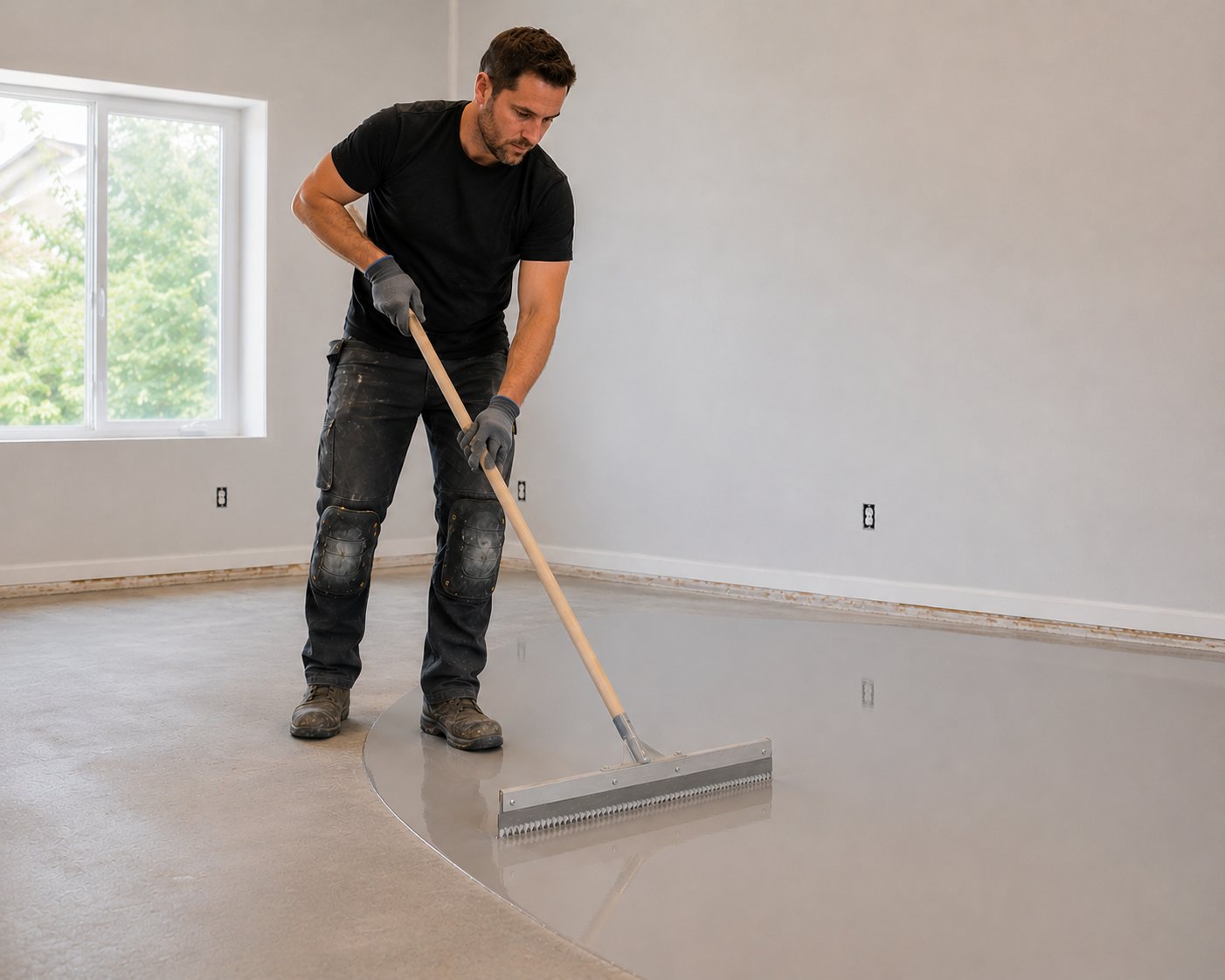
This guide explains the checks we make before deciding whether tiles can stay, what preparation goes over them, and when lifting them is the better option. Our subfloor preparation service covers the smoothing, overlay and moisture work described here.
First check: are the tiles sound?
New flooring is only as stable as the surface beneath it. Every tile needs to be firmly stuck down. Tapping across the floor finds hollow-sounding tiles that have lost their bond, and any that move, rock or are cracked need dealing with before anything goes over them. A loose tile under a floating floor can click and shift; under a glued floor it can break the bond of the new covering.
Look for the cause of any failure too. A run of loose tiles can point to movement in the base or past water, and those problems would carry on under a new floor.
- Tiles firmly bonded, with no hollow areas
- No cracked, raised or missing tiles
- The floor is level enough for the chosen product
- No signs of damp or a previous leak
Grout lines and the difference between LVT and laminate
Grout joints sit slightly lower than the tile faces, and many tiles have bevelled edges. Laminate and rigid click LVT bridge small hollows reasonably well because they float on an underlay, provided the floor is flat within the manufacturer limits. Thin glue-down LVT is flexible and will show grout lines and tile edges through its surface over time, so the tiles need to be covered with a smoothing compound first.
Glazed tiles are also very smooth and non-absorbent, so a suitable primer is used before smoothing compound or adhesive goes on. The product instructions decide what is acceptable; our click vs glue-down LVT guide explains why the two systems need different bases.
Height, doors and thresholds
Keeping the tiles adds the new floor, any underlay and any smoothing compound on top of the existing height. That build-up can mean doors need easing, and it changes how the floor meets the next room. Kitchens need particular care: dishwashers and other appliances under the worktop may no longer slide back into place once the floor is raised.
A threshold or ramp may be needed where the new floor meets a lower surface. Our guide to thresholds and transition strips covers the options.
Moisture and underfloor heating
Tiles are often found on ground floors over concrete, where moisture can be an issue, and in bathrooms and kitchens. A tiled surface can hide damp in the slab beneath it, so moisture is considered before a new floor goes down. Laminate normally needs a damp-proof underlay on a concrete base; glue-down LVT may need a moisture treatment as part of the preparation.
If the tiles sit over underfloor heating, check that the new floor, underlay and any preparation are suitable for use with heating. Our guide to flooring over underfloor heating explains what to look for.
When the tiles should come up
Removing tiles makes sense when many are loose, when the build-up would cause problems with doors or appliances, or when the base beneath needs attention. It is noisy, dusty work and the floor underneath usually needs smoothing afterwards, so it adds time to the job. A survey weighs those factors for your room rather than applying one rule to every tiled floor.
Want a professional to handle it?
Frequently asked questions
- Can you lay laminate over tiles?
- Usually, if the tiles are firmly bonded and the floor is flat enough for the product. Laminate floats on an underlay, which helps bridge small grout lines, but loose or cracked tiles need dealing with first.
- Can you lay glue-down LVT directly on tiles?
- Not directly. Grout lines and tile edges would show through thin LVT, so the tiles are primed and covered with a smoothing compound to give a flat, smooth surface first.
- Is it cheaper to leave tiles down?
- It can avoid removal work, but the tiles may still need priming and smoothing. The cost depends on their condition and the product, which a survey confirms.
- How long does fitting LVT over tiles take?
- It depends on the area and the preparation. Where smoothing compound is used, it needs time to dry before the LVT is fitted, which the written quote will set out.
Keep reading
Screed flooring before LVT, vinyl or laminate: how latex self-levelling compound works, when it's needed, and how it differs from sand-cement screed.
Click LVT or glue-down LVT? Compare stability, feel, subfloor needs and cost before choosing your fitting method.
What proper subfloor preparation involves before new flooring goes down, why it matters, and what our fitters check on survey day.
See how we survey, prepare and fit LVT across Kent.
See how we survey, prepare and fit laminate across Kent.
Related services
Covering Kent and London.
Talk it through with a fitter, not a call centre
Book a free survey and we will assess the room and the base, then set out the preparation and fitting in a written quote.