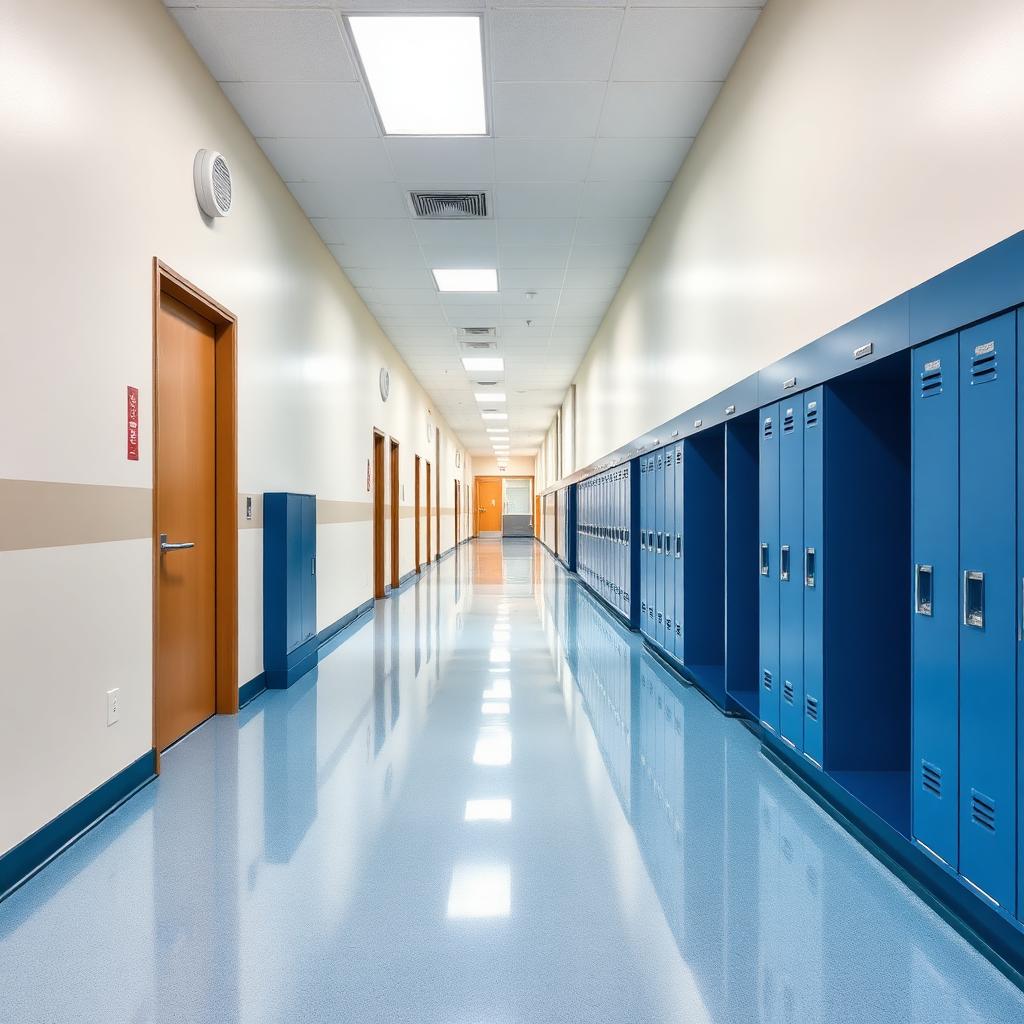
What Flooring Suits Schools and Nurseries?
Flooring considerations for schools and nurseries — durability, slip resistance, acoustics and fitting around term-time schedules.
Schools and nurseries put flooring under sustained pressure — constant footfall, furniture being moved daily, spills, and in nurseries, young children spending significant time sitting or playing directly on the floor. Specification needs to account for durability, safety and cleanability all at once.
This guide covers the recurring considerations for education settings, along with the practical reality of fitting work needing to happen around term dates rather than during them.
Budgets for school flooring also tend to be planned well ahead of the work itself, often tied to the academic year's capital spending cycle, which means decisions are frequently made months before the holiday window in which the fitting will actually happen.
Durability under sustained footfall
Classrooms, corridors and halls see far higher daily footfall than a typical commercial office, and flooring specified for schools generally needs a robust wear layer designed for heavy or extra-heavy commercial use rather than light-use products.
Slip resistance in shared and wet-prone areas
- Entrance areas and corridors near external doors are prone to wet floors in poor weather and benefit from higher slip resistance
- Dining halls and food areas need flooring that stays safe when spills occur
- PE and sports hall areas often require a specific sports-suitable flooring specification, distinct from general classroom flooring
Nursery-specific considerations
In nursery and early years settings, children spend more time sitting or crawling directly on flooring, which raises the importance of a warm, comfortable, easy-to-clean surface, alongside softer-underfoot options in some play areas balanced against durability needs.
Acoustic management in shared teaching spaces
Hard flooring in corridors and halls can increase reverberant noise, which is a genuine consideration in busy schools; acoustic underlay or carefully chosen products can help manage noise levels without compromising durability.
Fitting around the school calendar
Most school flooring work is scheduled around holiday periods — half-terms, Easter, summer — to avoid disrupting term-time teaching. This means project timelines often need to be planned well in advance to secure the right holiday window, particularly for larger areas.
Specialist science and art room floors
Science labs and art rooms often need chemical-resistant flooring able to withstand spills from reagents, paints or solvents without staining or degrading, which is a more specific requirement than the general durability needed in a standard classroom.
Coordinating access with site staff during the holidays
Even during a school holiday, site access usually still needs coordinating with caretaking or facilities staff, particularly where other holiday works — redecoration, electrical upgrades — are happening at the same time and trades need to sequence around each other.
Managing budget across multiple classrooms and phases
Larger schools sometimes phase flooring replacement across several years rather than doing every classroom at once, prioritising the areas showing the most wear or the highest footfall first. This approach spreads cost over multiple budget cycles but benefits from a consistent product choice across phases so later areas match earlier ones.
Frequently asked questions
- When is flooring work usually carried out in schools?
- Most work is scheduled during school holidays — particularly the summer break for larger projects — to avoid disrupting teaching, though smaller jobs in unused rooms can sometimes be fitted during term time.
- Is safety flooring necessary throughout a school?
- It's most commonly specified in areas prone to spills or wet conditions, such as dining halls, science labs and entrance areas, rather than uniformly throughout the whole building, though the right approach depends on the specific school.
- What flooring is typically used in nursery play areas?
- A mix of warm, durable hard flooring and softer play surfaces is common, balancing comfort for children sitting and playing on the floor against the practical need for easy cleaning and durability.
- How far in advance should school flooring projects be booked?
- Given that most work needs to fit within holiday windows, it's sensible to plan and survey well ahead of the intended holiday period, particularly for larger areas or where subfloor remediation might be needed.
Keep reading
Key flooring considerations for care homes — slip resistance, wheelchair and trolley use, infection control and low-disruption fitting.
How commercial flooring projects are costed — area, product spec, subfloor, phasing and out-of-hours work — with guide-only UK price bands.
What to think about when specifying flooring for an office refurbishment — footfall zoning, acoustics, cabling and phased fitting.
See how we survey, prepare and fit safety flooring across Kent.
See how we survey, prepare and fit commercial flooring across Kent.
Talk it through with a fitter, not a call centre
Request a measured written quote from Kent Flooring Warehouse after a free, no-obligation site survey — call 07702 737267 to book a visit from our Gillingham-based team of in-house fitters.