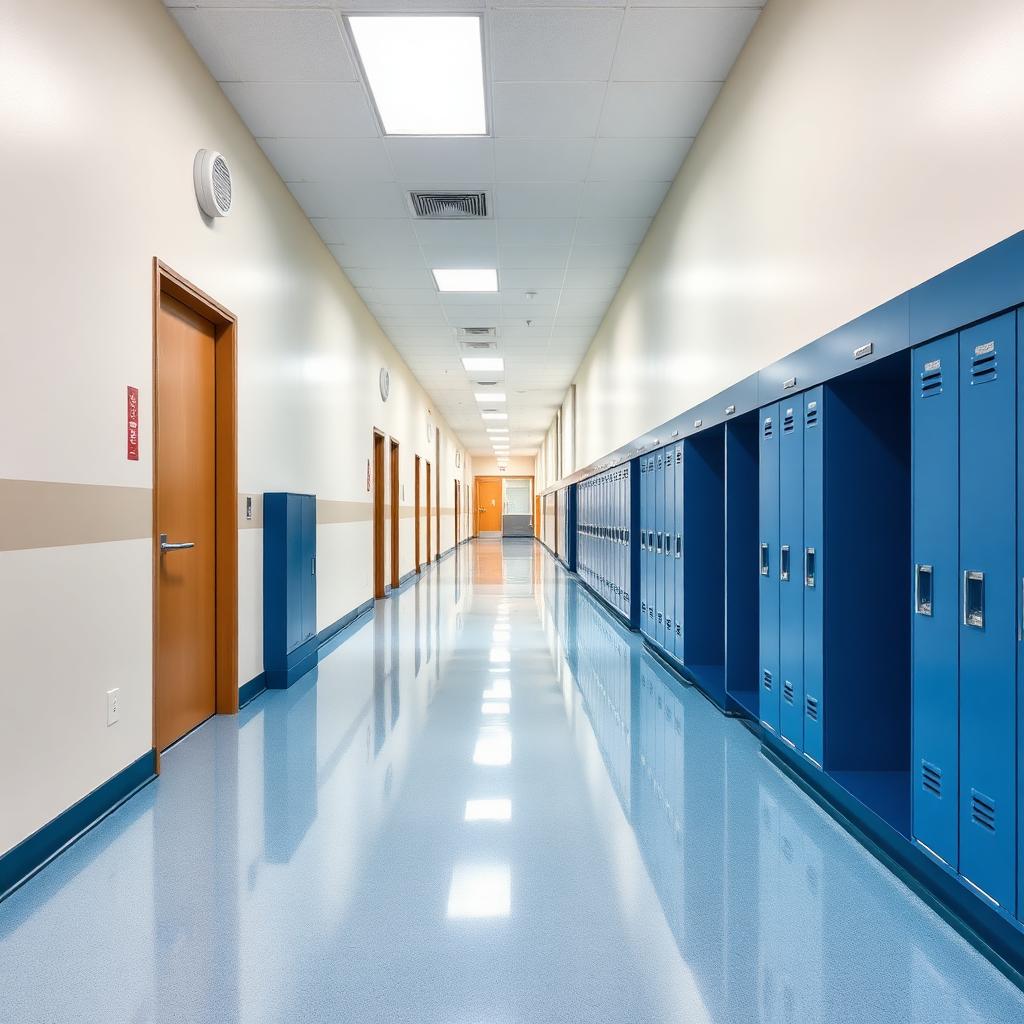
What Is Safety Flooring?
Safety flooring explained simply: what makes it slip resistant, how it differs from standard vinyl, and the kitchens, washrooms and wet areas it is used in.
Safety flooring is a type of vinyl built to keep its grip when the surface gets wet or greasy. It looks much like ordinary sheet vinyl from a distance, but it carries particles through its wear layer that give the foot something to hold on to, and those particles run through the material rather than sitting on top, so the grip lasts as the floor wears.
It is not a special coating and it is not just a textured pattern. That difference is why it gets specified for staff kitchens, washrooms, changing areas, care settings and entrances where water is walked in.
How it differs from standard vinyl
Standard vinyl is designed to be easy to wipe and comfortable, and it is perfectly fine in a dry room. Once water, soap or cooking oil is on it, the smooth surface can become slippery. Safety vinyl trades a little of that smoothness for sustained grip, so it can feel slightly rougher underfoot and needs the right cleaning method to stay effective.
Because it is usually laid as sheet, safety flooring is often welded at the seams and turned up the wall as a coved skirting. That leaves no open joint or corner for water and dirt to gather in, which matters as much as the grip in a washroom or kitchen.
Where it is normally used
- Commercial and staff kitchens where grease and spills are daily
- Washrooms, toilets and changing rooms
- Care and healthcare rooms where residents and staff move around wet floors
- Entrances, corridors and wet areas in schools and public buildings
What to think about before choosing it
The floor underneath has to be flat, dry and sound, because sheet vinyl shows every bump in the base. That is why many safety flooring jobs include removing the old covering, checking moisture and levelling the subfloor first.
Cleaning matters too. A safety floor cleaned with the wrong product can clog and lose grip, so we pass on the maker's care guidance at handover. If a room only gets the odd splash, standard vinyl or LVT may be the more comfortable choice, and we will say so.
Frequently asked questions
- Is safety flooring the same as non-slip flooring?
- People use the terms loosely. Safety flooring is designed to hold its grip in wet conditions for its working life, which is more than a textured finish on its own.
- Can safety flooring go in a home?
- It can, for example in a utility room or a wet room, but many homeowners find standard vinyl or LVT more comfortable in dry rooms.
- Why are the seams welded?
- Welding closes the joints between sheets so water and dirt cannot get under the floor, which keeps it hygienic and stops edges lifting.
- Does safety flooring need special cleaning?
- It needs the cleaning method the maker recommends. The wrong product can leave a film that reduces the grip, so we hand over written care guidance.
- Can it be laid over an old floor?
- Sometimes, if the old floor is sound, flat and dry, but most commercial jobs involve taking the old covering up first, especially where coved skirting is added.
Keep reading
Safety flooring or standard vinyl — know the difference in slip resistance, compliance and where each belongs.
What seam welding is, why it's used on sheet vinyl in wet areas and commercial settings, and how it differs from a standard seam.
Key flooring considerations for care homes — slip resistance, wheelchair and trolley use, infection control and low-disruption fitting.
Commercial vinyl flooring explained: sheet, safety vinyl and LVT for workplaces, what each suits, how it is laid and why the subfloor decides how well it performs.
Talk it through with a fitter, not a call centre
If a room needs safety flooring, we can survey it, check the subfloor and give you a written quote.