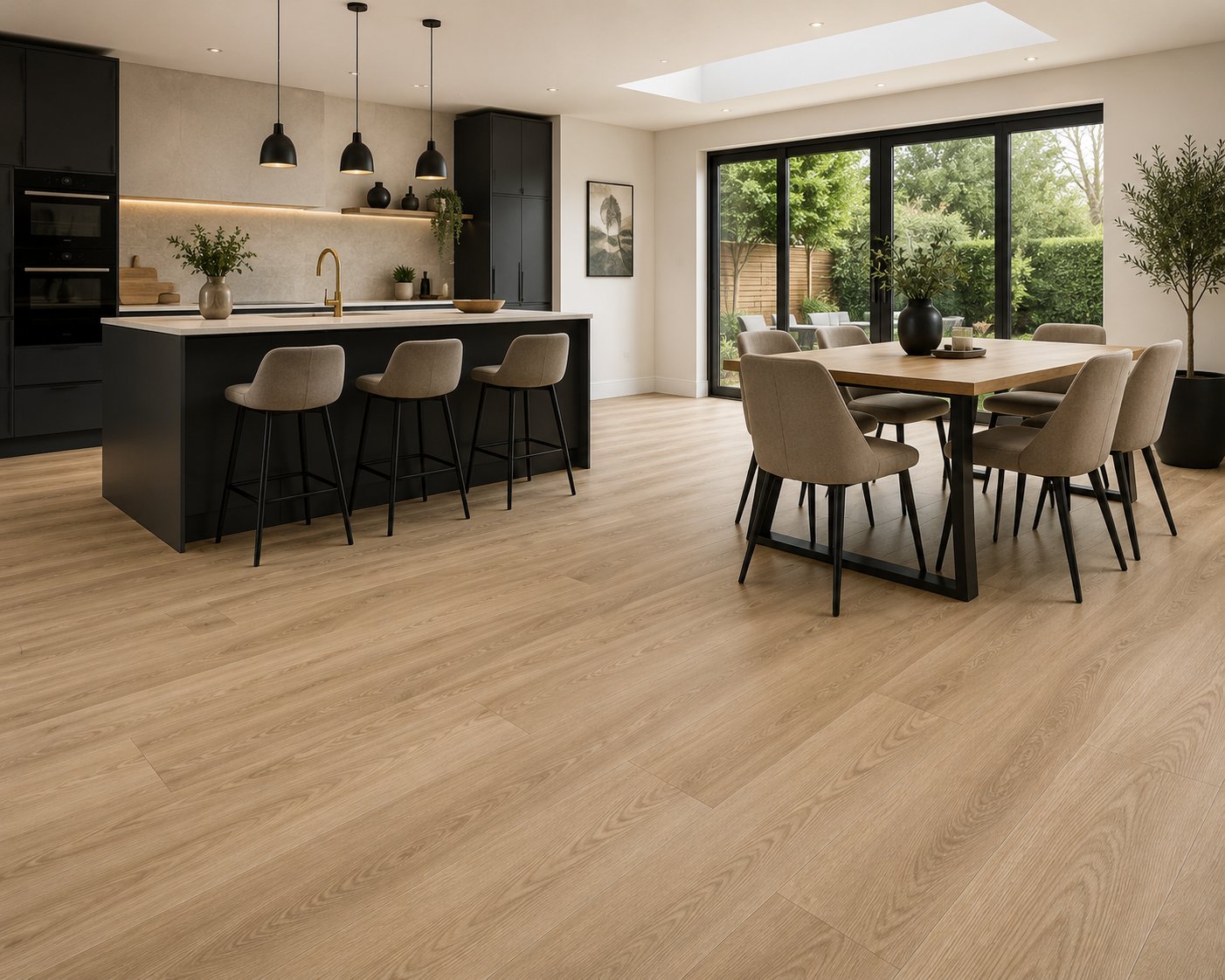
Tile effect vinyl flooring and stone effect LVT
Compare tile effect vinyl flooring and stone effect LVT. Choose the tile format, fitting system, layout and preparation with a free survey and quote.
Tile effect vinyl flooring offers a decorative tile appearance in a vinyl covering. Within our LVT options, tile formats and stone effects give an alternative to a wood-plank design. The printed finish is not natural stone, and the installation still follows the selected vinyl product. Compare the sample, tile dimensions and fitting system together rather than treating a stone-look picture as a complete specification.
Our LVT product page explains the wider material category. This page focuses on the design and fitting decisions specific to tile effect LVT: the scale of the pieces, the direction of the joints, edge cuts and the transition into neighbouring floors. Stone effect LVT can suit a different visual brief from wood effect without becoming a different installation material simply because its pattern changes.
Look at the whole tile, not just the colour
A small sample helps compare tone and surface finish, but it cannot show the proportions of a complete tile or how the design repeats across a room. Consider the size of the pieces against the available floor area. A layout with narrow perimeter cuts may read differently from the larger blocks you imagined, particularly in a narrow room or around fitted furniture.
View samples beside the cupboards, worktops and adjoining floor you intend to keep. Think about whether you prefer a quiet stone appearance or a more visible decorative variation. The sample and named collection should guide the decision; a descriptive colour name alone does not establish how the finished surface will look under the room lighting.
Agree joint lines and the starting point
Decide which entrance provides the main view and how the tile lines meet it. Setting out should balance cuts on opposite sides where practical and account for alcoves, doorways and fixed units. A wall that is not square may make a layout based on that edge alone look uneven elsewhere. Discuss the pattern before committing the first row.
Some products allow decorative joint details or design strips; use only the options supported by the particular system. Do not assume a click tile accepts the same details as a flexible glue-down tile. Where rooms connect, agree whether the tile lines continue or a threshold separates the layouts. These choices belong in the fitting brief, not in a last-minute decision after materials arrive.
Choose the installation system for the base
LVT includes glue-down and click systems. The tile effect does not decide which one suits your room. A bonded product needs the appropriate smooth surface and adhesive; a click system has its own requirements for flatness, perimeter movement and permitted underlay. Our LVT installation service brings the selected product and survey findings into the same proposal.
Existing ceramic tiles need assessment before an overlay is considered. Loose tiles, grout lines and height differences may affect the new covering. Moisture and substrate stability still matter even if the old tiled finish appears tidy. The preparation may include smoothing or another treatment matched to the product, with door clearance and transitions considered against the complete finished build-up.
Compare the fitting scope and daily care
A tile effect vinyl quote depends on the chosen range, area, setting out, cuts and base preparation. Uplift and finishing details can change the total independently of the decorative surface. Compare the named products and the work included rather than assuming two stone-look samples represent equivalent installations. Supply-only and supply-and-fit can be discussed according to how you want to organise the project.
For rooms with underfloor heating, check the exact LVT product and heating requirements together. Water resistance of a covering also does not make the entire room waterproof: joins, perimeter details and the base remain separate considerations. After fitting, remove grit and follow the named floor cleaning instructions. Use its recommended cleaner rather than stone polish or a ceramic-tile treatment chosen because the vinyl resembles those materials.
Frequently asked questions
- Is tile effect LVT the same as stone flooring?
- No. It is a decorative vinyl covering with a tile or stone appearance. The construction, fixing and care requirements are those of the selected LVT product rather than natural stone.
- How do I choose a tile size for my room?
- Compare complete piece dimensions with the room plan, entrances and fixed furniture. Agree the joint direction and perimeter cuts as well as the sample colour.
- Can tile effect vinyl flooring go over existing tiles?
- Sometimes, after assessing stability, moisture, grout lines and finished height. The base treatment must suit the chosen LVT system; an intact-looking tiled floor is not automatically ready.
- What affects cost and fitting time?
- The selected product, layout, room cuts, uplift, preparation and fixing requirements determine the quotation and programme. Agree these after the survey rather than using appearance alone.
Where to go next
LVT vs tiles compared for kitchens, bathrooms and hallways: warmth, comfort, water, fitting time, preparation and long-term care. Laminate vs tiles too.
Can you lay LVT over tiles? When tiles can stay under LVT or laminate, the checks needed, preparation options and when the tiles should come up.
Free measure, free written quote
Bring your preferred tile appearance and room details to a free survey for a written LVT supply and fitting proposal.
Showroom and warehouse: Unit 9, Matilda Close, Gillingham Business Park, Gillingham, Kent, ME8 0PY