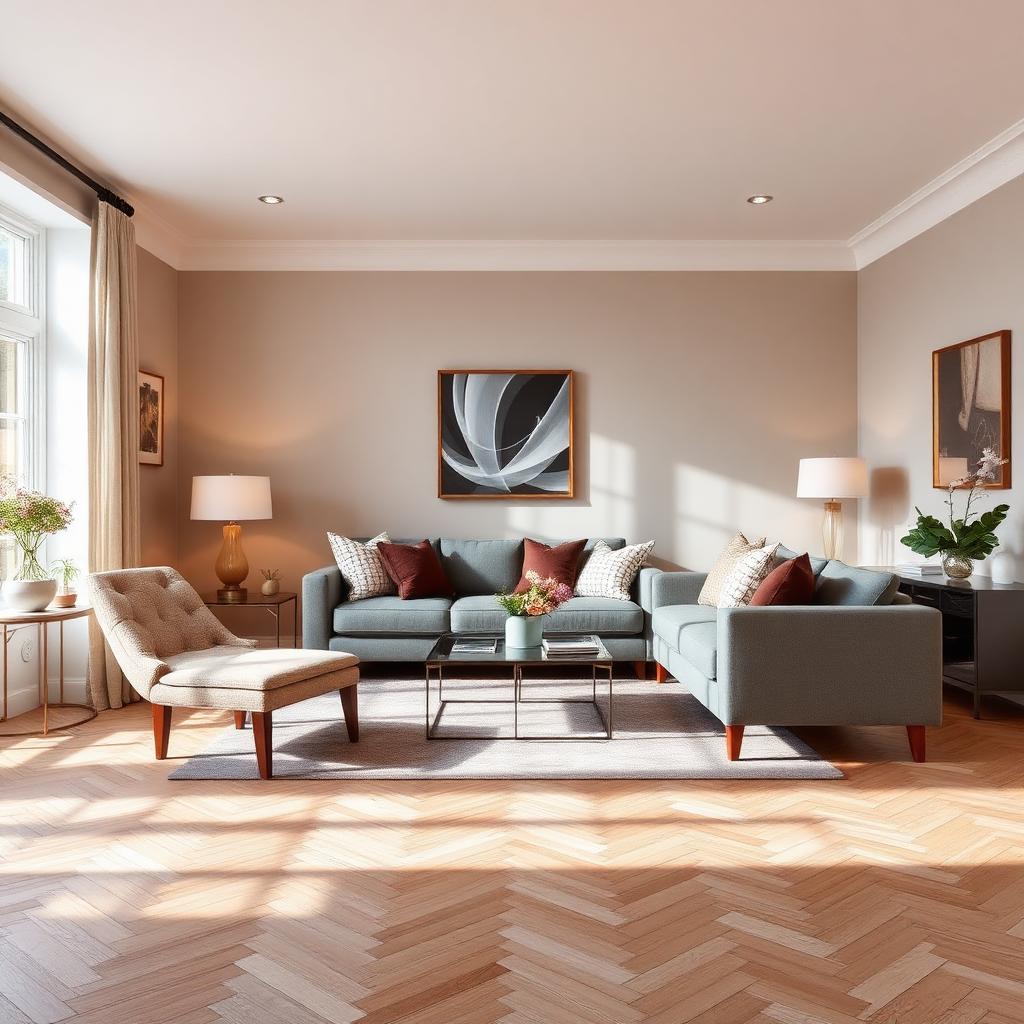
Best Flooring for a Dining Room
Choosing dining room flooring: how LVT, laminate, engineered wood and carpet cope with chairs being pulled out, food spills and a table that never moves.
A dining room floor takes a very particular kind of wear. The table sits in one spot for years, chairs are dragged back and forth several times a day on the same patch, and food and drink land on it more often than anyone admits. Choosing well means planning for those three things, not just for how the floor looks in the sample.
How each floor copes
| Floor | Chairs dragging | Spills | Feel |
|---|---|---|---|
| LVT | Good with felt pads; heavier wear layer helps | Wipes clean easily | Warm, slightly soft |
| Laminate | Hard wearing surface, can be noisy | Fine if wiped quickly; dislikes standing liquid | Firm |
| Engineered wood | Will mark over time, can be refinished | Needs prompt wiping | Natural, warm |
| Carpet | Pile flattens under chairs | Stains are the main risk | Soft and quiet |
Why most dining rooms end up with a hard floor
For families, LVT is often the practical answer: it shrugs off spills, cleans with a damp mop and, with a decent wear layer, hides the scuffs chairs leave. Laminate is a sound choice on a tighter budget, as long as drinks are wiped rather than left. Engineered wood suits a more formal room where you are happy to see a floor age and possibly refinish it later.
Carpet still has a place in a quiet, adult dining room where warmth and soft acoustics matter more than easy cleaning, but a large rug under the table on a hard floor gives some of that softness with far less worry.
Details that make the floor last
- Felt pads on every chair leg, replaced when they wear through
- A consistent floor running through into the kitchen if the rooms connect, with neat thresholds where they do not
- A level base before fitting, so the table does not rock
- Checking door clearance, as a new floor can raise the height slightly
Frequently asked questions
- Is carpet a bad idea in a dining room?
- Not always, but it stains and flattens under chairs. It works best in quieter adult homes, while busy family dining rooms usually suit a hard floor.
- Should the dining room match the kitchen floor?
- In an open plan space a single floor usually looks better and avoids trip edges. Separate rooms can have different floors joined with a neat trim.
- Will chairs scratch LVT?
- Chairs dragged without pads will mark any floor. With felt pads and a sensible wear layer, LVT holds up well.
- Can you move the furniture on fitting day?
- Ask at quote stage. Furniture moving and uplift of the old floor can be arranged so the room is ready to use again quickly.
Keep reading
Choosing between carpet, LVT, engineered wood and laminate in a lounge, covering warmth, acoustics, log burners, pets and how the room is actually used.
Running one floor through kitchen, dining and living areas: expansion, zoning, transitions, levels between old and new, and where a single material stops working.
Claw scratches, accidents, spills and slips. Which floors cope with dogs, cats and young children, which fail early, and the detail that keeps them safe.
Talk it through with a fitter, not a call centre
Bring a photo of your dining room to the showroom or book a home visit, and we will help you choose and quote the floor.