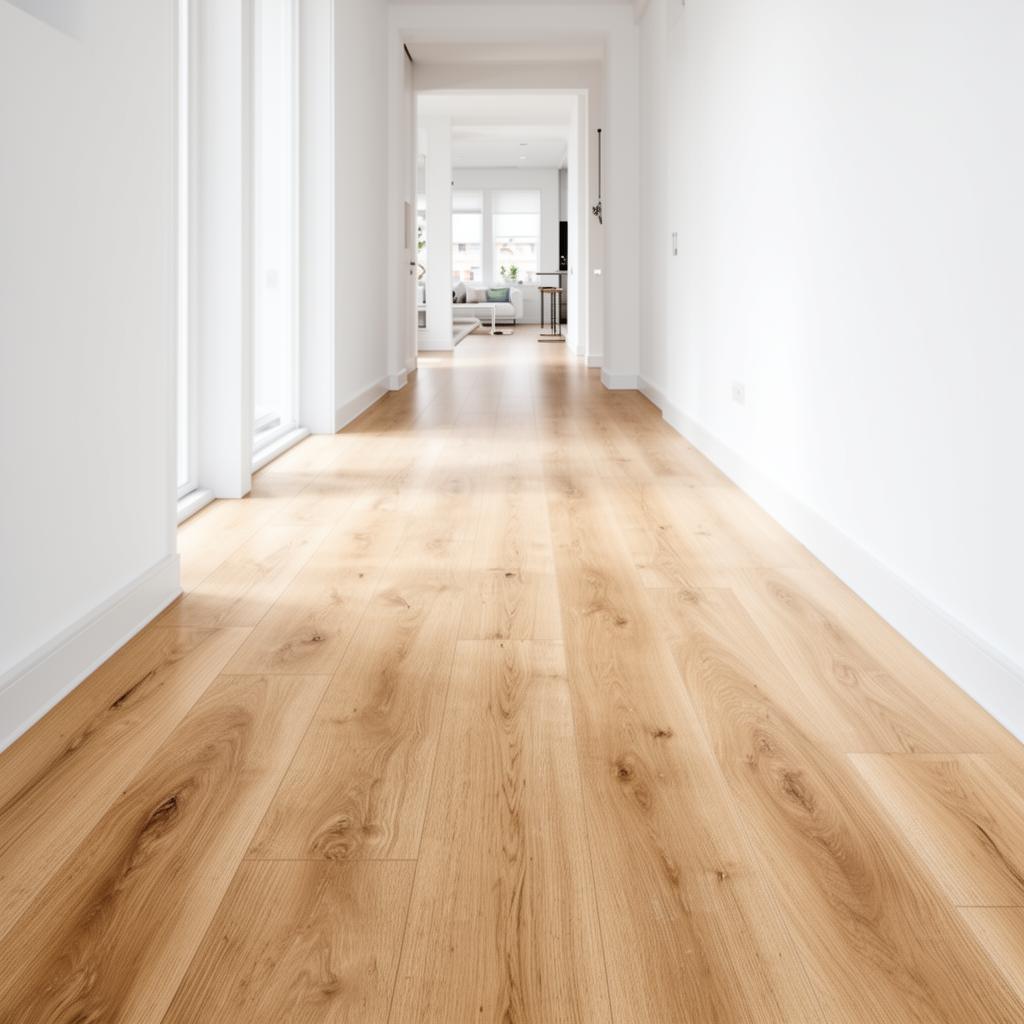
Gaps Opening in Laminate Flooring
Why laminate boards separate over time and how we close the gaps or refit the floor correctly.
A small, even gap around the edge of a laminate floor is normal and by design — it lets the boards expand in warm weather. What isn't normal is a gap opening up between the boards themselves, in the middle of the room, months or years after fitting.
This is one of the most common laminate complaints we're called out to in Kent, and it's usually fixable without lifting the entire floor, provided we catch the cause early.
Newer homes and recently plastered rooms are particularly prone to this in the first year, since drying-out plaster and screed release moisture into the air that later dries out as the building settles, shifting humidity levels well beyond what a typical lived-in home experiences.
Where gaps typically appear
- In a single run of boards, often near a radiator or window
- Across the whole floor evenly, suggesting shrinkage
- At the short ends of boards more than the long edges
- Widening seasonally with heating on and off
Why laminate boards separate
Laminate is a floating floor made of layers bonded around a wood-fibre core, and that core reacts to changes in humidity. If a room dries out too quickly, especially with central heating running hard through winter, the boards shrink slightly and the click-lock joints can pull apart.
- Central heating drying the air and the boards out
- Locking mechanism damaged during fitting or by furniture dragging
- No proper acclimatisation of the boards before fitting
- Underlay too thin or inconsistent, letting boards flex apart
How we diagnose the cause
We check the room's humidity, look at where the gaps sit relative to heat sources, and inspect a lifted board's locking edge for damage. If gaps are widespread and even, it usually points to humidity and acclimatisation; if it's one or two boards, it's more likely mechanical damage.
Closing the gaps: the options
- Tap-block re-jointing: gently knocking boards back together where the lock isn't broken
- Board replacement: swapping a damaged board using leftover stock or a matched product
- Humidifying the room in winter to slow further shrinkage
- Full re-lay if gaps are widespread across several rows
What we do differently to prevent recurrence
We always acclimatise laminate in the room for at least 48 hours before fitting, and we use underlay matched to the manufacturer's spec. These two steps prevent the majority of shrinkage-related gapping we see on floors fitted elsewhere.
Furniture, rugs and everyday habits that make it worse
Dragging heavy furniture across laminate rather than lifting it can knock the locking mechanism out of alignment at specific points, which often shows up later as a gap that seems to have appeared from nowhere.
Thick rugs placed directly over a laminate floor can also trap humidity differently underneath them than the surrounding exposed boards, occasionally causing slight, localised movement at the rug's edges over time.
It's also worth checking skirting boards and beading after any repair, since these are designed to sit just proud of the expansion gap rather than pinned directly to the floor, and beading that's been fixed too tightly can itself restrict the natural movement laminate needs, contributing to gaps reappearing elsewhere in the room.
Frequently asked questions
- Can I just fill the gaps with sealant?
- We don't recommend it. Sealant stops the boards moving naturally and can cause cracking elsewhere. It's better to re-tap the boards together or replace the damaged one.
- Will a humidifier really stop the gaps?
- It can help slow further shrinkage in very dry, centrally heated homes, but it won't reverse gaps that have already opened — those need mechanical re-jointing or board replacement.
- Is this covered under a laminate warranty?
- Sometimes, if the manufacturer's fitting guidelines weren't followed. We can advise once we've seen the floor and identified the cause.
- How long does a repair like this take?
- A localised re-jointing or board swap is usually a same-day job. A wider re-lay depends on room size but is typically done within a day.
Keep reading
Why LVT planks or tiles curl, peel or lift at the joints, and how our fitters diagnose and put it right.
Why engineered wood floors cup, crown or gap, and the humidity and subfloor fixes that resolve it.
Why timber floorboards squeak or feel uneven underfoot, and how we sort it before new flooring goes down.
How laminate flooring is installed, step by step: acclimatising boards, levelling, underlay, expansion gaps, doorways and finishing trims, plus common mistakes.
See how we survey, prepare and fit laminate across Kent.
Talk it through with a fitter, not a call centre
Book a free, no-obligation survey with Kent Flooring Warehouse's in-house fitting team — call 07702 737267 and we'll inspect the floor and give you a straight answer on the fix.