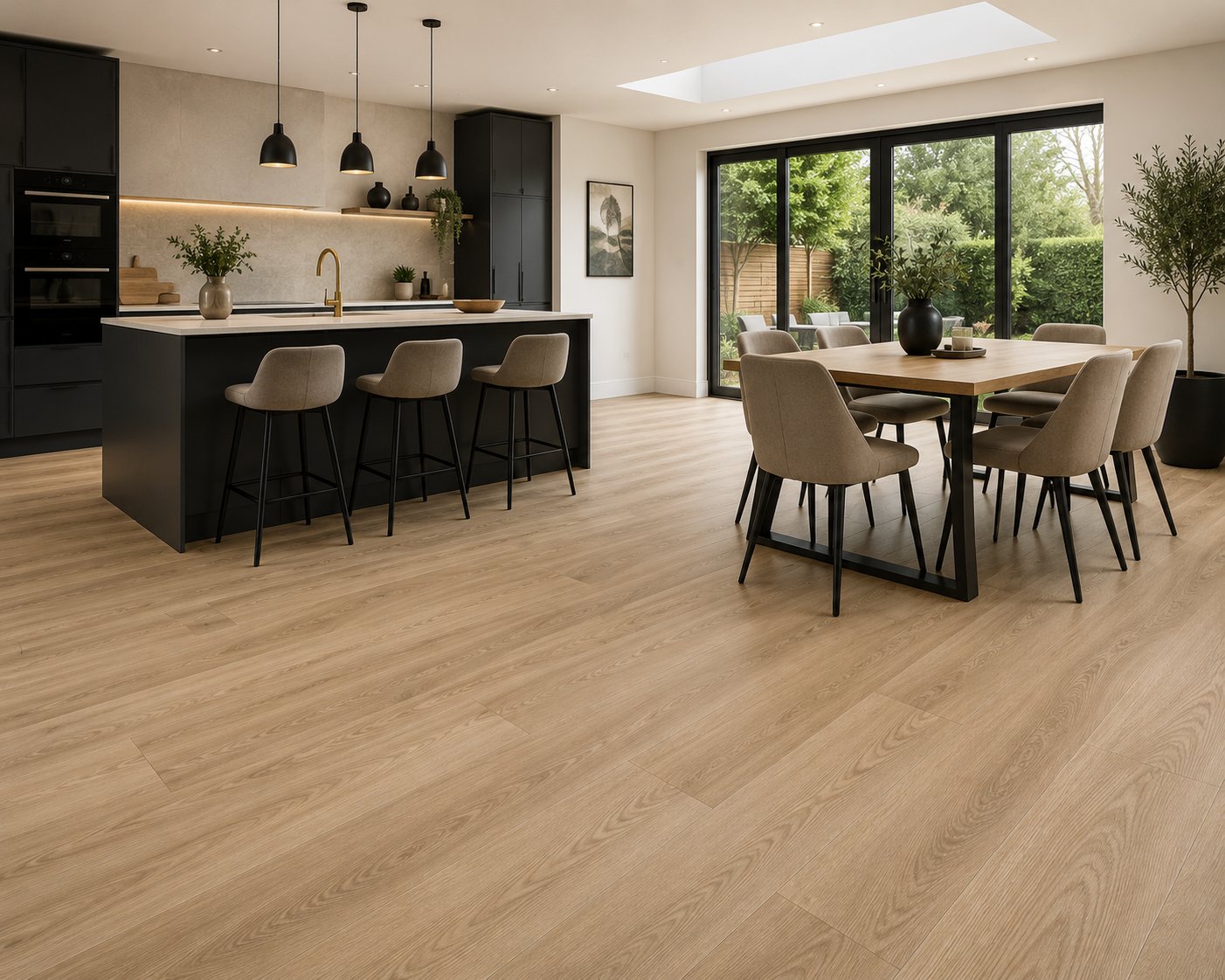
LVT Wear Layer and Wear Rating: What the Numbers Mean
How LVT wear layer thickness and AC/commercial use class ratings relate to durability, and which specification suits which room.
The LVT wear layer is the clear protective film on top of the printed design, and its thickness tells you how much surface wear the plank can take before the pattern shows damage. The use class rating, such as 33 or 34 for commercial floors, tells you which setting it is made for.
LVT specifications are often reduced to a single number — wear layer thickness in microns — but that's only part of the picture. The construction beneath it, the printed design layer, and the overall use class rating all affect how the floor performs day to day, and which is right depends entirely on the room and how much footfall it sees.
Understanding a few key terms makes it much easier to compare products fairly rather than assuming a thicker wear layer always means a better floor for your specific use.
It's also worth separating wear layer performance from indentation resistance, since the two get confused. A thick wear layer resists scratching and abrasion well, but a core that's too soft can still dent under a stiletto heel or a heavy static load such as a fridge or a cabinet leg — the wear layer sits on top of whatever's underneath it, and it can't compensate for a weak core.
What the wear layer actually protects
The wear layer is the clear, tough top layer that protects the printed design beneath it from scuffs, scratches and general foot traffic. It doesn't affect the structural stability of the plank, but it does directly affect how long the surface finish will look good before showing wear.
Beneath the wear layer sits the printed decorative film that gives the plank its wood or stone appearance, and beneath that the core — either a flexible vinyl core or a rigid SPC/WPC core — which carries the plank's stability and dimensional performance. A scratched or worn wear layer exposes the print layer underneath, which is why it's the first thing to show its age even on a structurally sound plank.
Surface finish and slip resistance
Some wear layers include an added surface treatment — a matt lacquer, an embossed texture, or a specified slip-resistance rating — on top of the raw wear layer thickness. This matters more in wet or commercial settings than the micron figure alone: a thin, highly polished wear layer can look premium but perform poorly underfoot when wet, whereas a textured or matt finish with a published slip rating is generally the safer specification for kitchens, bathrooms and any commercial wet area.
Wear layer thickness and typical setting
| Wear layer | Typical use class | Typical setting |
|---|---|---|
| 0.15–0.20mm | Residential, light use | Bedrooms, low-traffic rooms |
| 0.30mm | Residential, general use | Living rooms, hallways |
| 0.55mm+ | Light commercial (33/42) | Kitchens, busy family homes, light retail |
| 0.70mm+ | Commercial (34/43) | Shops, offices, higher footfall areas |
Understanding use class ratings
European use class ratings combine a number for setting (2 = domestic, 3 = commercial, 4 = industrial) with a number for traffic intensity (1 = moderate, up to 3 = heavy). A rating like 34 means suitable for general commercial use with heavy traffic — worth checking against the actual footfall your space will get, not just whether it's a home or a business.
Rigid core versus flexible LVT
- Rigid core (SPC/WPC) LVT is more dimensionally stable and better at bridging minor subfloor imperfections
- Flexible/glue-down LVT can be thinner overall and suits areas needing a lower finished floor height
- Both can carry a range of wear layer thicknesses, so construction and wear layer are separate decisions
Matching the spec to the room
A hallway or kitchen in a busy household benefits from a higher wear layer and use class than a spare bedroom, even though both are 'residential'. For any commercial project, the specific use class needs matching to the site's actual footfall, not just picked from a brochure description.
Warranty terms tied to wear layer and use class
Manufacturer warranties are almost always written against a specific use class and a specific setting, not just a product name — fitting a residential-rated LVT in a shop or a busy communal hallway can invalidate the warranty even if the flooring visually copes for a while. Checking the warranty documentation against the room's actual use, rather than assuming any LVT will be covered anywhere it's laid, avoids a costly surprise if a claim is ever needed.
Frequently asked questions
- What does a 33 wear rating mean on vinyl flooring?
- Class 33 is a commercial use class. On this site it sits in the light commercial band, suited to kitchens, busy family homes and light retail, with 34 used where footfall is heavier.
- Is a thicker LVT wear layer always better?
- Not on its own. The overall use class, the core construction and the subfloor underneath all affect performance, so compare the rating for your room rather than the wear layer number alone.
- Is a thicker wear layer always better?
- Not necessarily for a domestic bedroom — it adds cost without much practical benefit there. It matters most in high-traffic areas like hallways, kitchens and any commercial setting.
- What use class do I need for a home kitchen?
- Most residential ranges with a decent wear layer (0.30mm or above) suit a home kitchen. If you have a very busy household or pets, stepping up to a light commercial-rated product is worth considering.
- Do commercial ratings apply to LVT used in shops?
- Yes — commercial and retail settings should use LVT rated for commercial use classes (typically 33 or 34), matched to expected footfall, rather than a domestic-rated product.
- Can I mix LVT ratings across a project?
- Yes, it's common to specify a lighter-rated product in low-traffic rooms and a heavier-rated one in hallways or commercial zones within the same project, provided the look is consistent if that matters to you.
Keep reading
Why plywood overlay boarding is used over timber subfloors before fitting vinyl or LVT, and how it differs from screeding.
A guide to the main flooring adhesive types used for LVT, vinyl, wood and carpet, and why the right choice depends on the subfloor.
What seam welding is, why it's used on sheet vinyl in wet areas and commercial settings, and how it differs from a standard seam.
How to choose LVT flooring: wear layer and rating, click or glue down, plank, tile or herringbone, underfloor heating, brands and what to check on samples.
See how we survey, prepare and fit LVT across Kent.
See how we survey, prepare and fit commercial flooring across Kent.
Talk it through with a fitter, not a call centre
Book a free, no-obligation survey with Kent Flooring Warehouse and our in-house fitting team will check your subfloor and confirm the right LVT wear layer and use class specification before you commit to anything — call 07702 737267.