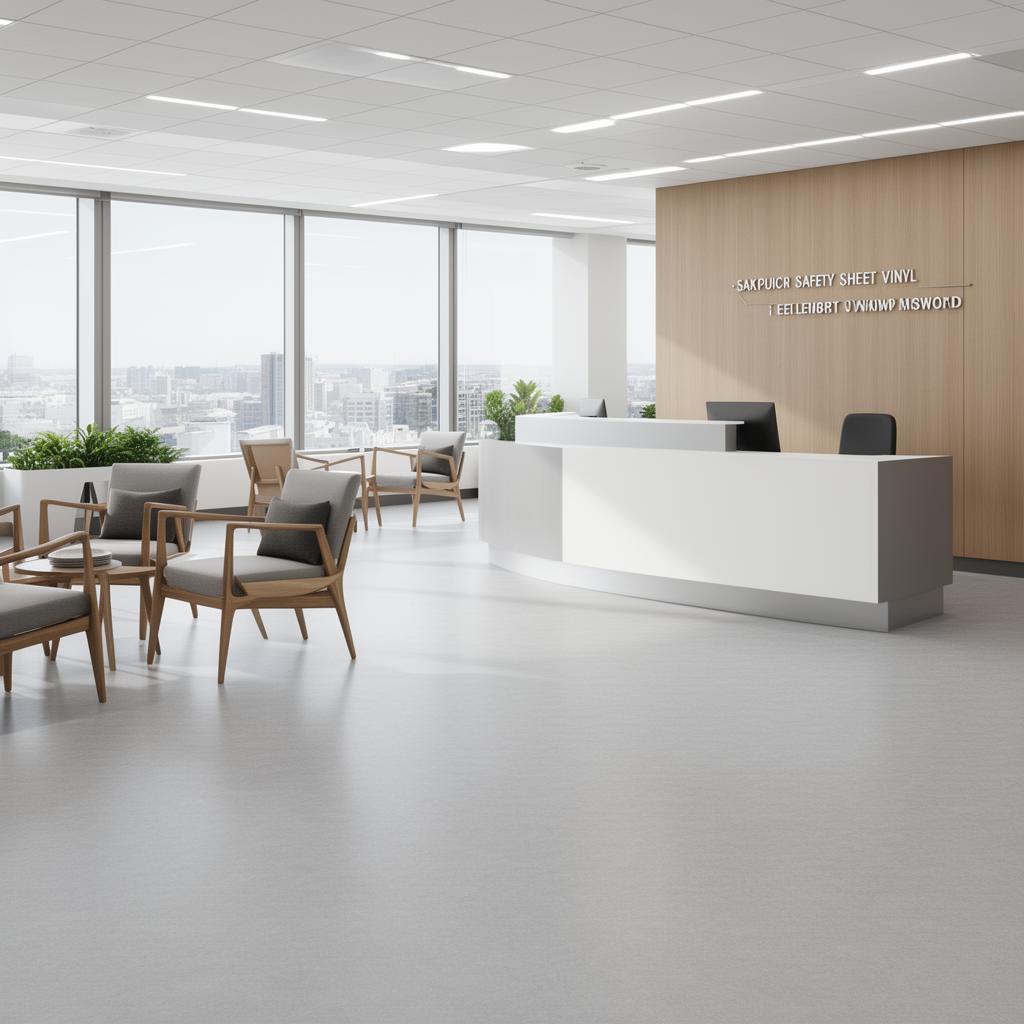
Wet room flooring in safety vinyl
Wet room flooring in Kent: slip-resistant safety vinyl laid to the falls, with welded seams and coving up the walls. Book a free survey and written quote today.
A wet room has no shower tray, so the floor itself carries the water to the drain. That asks a lot of the covering. It has to grip under bare feet, follow the falls without bubbling and keep water out at every seam and wall edge. Safety vinyl is made for exactly that: a continuous sheet with a slip-resistant surface that can be welded at the joins and turned up the wall as coving.
We fit wet room flooring in homes, care settings and commercial washrooms. The shower, drain and waterproofing below the floor are part of the bathroom installation; we survey the prepared floor and lay the safety vinyl to it.
Choosing a wet room vinyl
Wet room safety vinyl is a different product from the shod-grade safety flooring used in kitchens. In a shower area people are barefoot and the floor is wet with soapy water, so the product should be rated for barefoot wet use. A domestic accessible bathroom, a care home en suite and a gym changing room may each suit a different range.
Altro and Polyflor both make safety flooring for wet areas, and our safety flooring service covers the wider range. At survey we talk through who uses the room, how it is cleaned and the look you want, then name the product on the quote.
How wet room vinyl flooring is laid
The base comes first. The falls towards the drain are checked so the vinyl can be laid to the existing gradient, and the surface is smoothed so no ridge or screw head shows through. Timber floors need to be rigid and properly prepared, because any movement can stress the vinyl at the drain and the seams.
The sheet is then fully bonded with the adhesive specified by the manufacturer. Seams are hot welded so there is no open joint for water to find. The vinyl is dressed into the drain fitting using the clamping ring or connection the drain is designed for, and taken up the walls as a coved skirting with a capped top edge. Our cap and cove flooring page explains that edge detail.
Where wet room vinyl works and where it does not
Safety vinyl suits level-access showers, accessible bathrooms and communal washrooms where grip and hygiene matter more than a tiled look. If you want a stone or wood effect, there are safety ranges with a decorative finish, though the choice is narrower than standard LVT.
Ordinary LVT and laminate are not wet room floors. LVT is fine in a bathroom with a bath or shower tray, but in a true wet room the open joints between tiles or planks let water through. Our guide to the best flooring for kitchens and bathrooms compares the options for rooms that are wet some of the time.
Planning the work
Let us know where the bathroom installation is up to when you enquire. The best time to survey is once the drain is set and the falls are formed, so the vinyl quote reflects the floor as it will be. For care settings and businesses, tell us whether the room needs to stay in use and we can plan the work around it. Our subfloor preparation service explains how the base is assessed.
Frequently asked questions
- How do you lay wet room vinyl flooring?
- The prepared floor is checked for falls and smoothed, then the safety vinyl is fully bonded, hot welded at the seams, connected to the drain fitting and coved up the walls with a capped edge.
- Is safety vinyl slippery when wet?
- Wet room safety vinyl is designed to keep its grip when wet. Choose a product rated for barefoot wet use and follow the manufacturer's cleaning guidance so the surface keeps working.
- Can LVT be used in a wet room?
- Not in the shower area of a true wet room. Joints between LVT planks or tiles let water through. Welded safety vinyl is the usual choice there.
- Do you fit the shower and drain?
- The shower, drain and waterproofing are part of the bathroom installation. We fit the safety vinyl to the prepared floor and connect it to the drain fitting.
- Can wet room vinyl go up the walls?
- Yes. Coving the vinyl up the wall with a capped top edge is standard in wet rooms, so there is no open corner for water to track behind.
Where to go next
Safety flooring explained simply: what makes it slip resistant, how it differs from standard vinyl, and the kitchens, washrooms and wet areas it is used in.
What seam welding is, why it's used on sheet vinyl in wet areas and commercial settings, and how it differs from a standard seam.
Free measure, free written quote
Tell us about the wet room, who uses it and where the bathroom work is up to. Book a free survey and we will quote for the safety vinyl and fitting.
Showroom and warehouse: Unit 9, Matilda Close, Gillingham Business Park, Gillingham, Kent, ME8 0PY